Online video offers tremendous reach and growth potential for advertisers and publishers alike. But disparate technologies and fragmented metrics have been longtime pain points. There’s a clear need for a solution that can bring standardization, interoperability and improved efficiency to the industry.
That solution might finally be on its way with the Interactive Advertising Bureau’s unveiling of their ambitious Advanced TV initiative. Built alongside standards that have already been approved by the Advanced Television Systems Committee (ATSC), the IAB’s work could prove to be a significant step toward universal addressability, both for the myriad of devices and online services that make up the ATV ecosystem, and for the elusive bridge to linear TV measurement as well.
Standardizing and unifying all these different outlets of buying and selling ads in a way that allows everyone to compete means that everyone can win, including consumers. We have seen in the past that these types of issues are resolvable when the industry comes together and comes up with a solution that works for everyone. This could be the start of something truly transformational.
Advanced TV explained
Before diving into the IAB’s plan, it’s important to understand what Advanced TV is.Namely,Advanced TV is an umbrella term that refers to any TV device or service that isn’t part of traditional broadcast channels (or Linear TV, with some exceptions). Those products and services are often distinct from one another in subcategory, but they’re all considered a part of Advanced TV as a whole.
From an advertising perspective, the key divide between Advanced TV and traditional broadcast is addressability, which isthe ability to serve targeted ads to viewers based on their individual data, and track the success of whole campaigns based on various observable metrics. Standardizing and streamlining that process across Linear and Advanced TV is the crux of IAB’s initiative.
The grand plan for Advanced TV
The IAB released a three-year roadmap that outlines the implementation of their vision. In it, they listed five key objectives that they will use to chart its success:
Interoperability for frame accurate ad delivery and ad break management
Universal addressability and reconciliation for audience measurement
Full auditability for advertising campaigns delivery
Ad measurement for delivery and viewability verification
Omnichannel sales management for programmatic buying and selling of upfronts as well as spot buys
To accomplish these objectives, the IAB outlined the technologies that they will be deploying over the next three years to modernize the medium.
Standardized Video Watermark Signal Utilizing OM SDK
Working within digital standards like OM SDK, the IAB’s open watermark signal will collect vital measurements like viewability verification across the breadth of ATV’s services and devices. It will also allow for universal ad break management and frame-accurate ad insertion or replacement for video publishers. This is all in hopes of achieving a better ad experience for consumers who are otherwise forced to view the same ad many times over due to poor targeting capabilities.
Universal Asset Identification (Ad-ID)
In conjunction with IAB’s watermark, a universal ad identification system will be key to auditing campaigns and creatives. This will provide the much-needed ability to track both throughout the supply chain, so any ad can be identified and attached to its respective campaign. Ad-ID will also be a crucial component of bridging the tracking gap to linear channels.
2+ Impression Currency
This technology and methodology will reconcile audience measurement based on data from multiple delivery channels, including linear ones. In the future, this will standardize tokenization and reconciliation, improving universal addressability.
Programmatic Upgrades via OpenRTB
To ensure scalability on a programmatic level, IAB’s watermark will integrate with OpenRTB signaling over the next three years. This will also include developing live streaming ad break management and publisher safety guidance.
Conclusion
If IAB’s initiative can deliver on its objectives, the Advanced TV landscape could be on the verge of a sweeping evolution. One that will turn the current disparate jumble of technologies and metrics into an interconnected, holistic, and truly universal measurement system across both linear and non-linear channels. The task is great and the days are early. But it’s hard not to be excited about the possibilities, and we’ll be among those watching the IAB’s progress – and the evolution of Advanced TV – with keen interest over the next few years.
As we look toward the rest of 2023 and beyond, it’s clear that respect for consumer privacy will continue to greatly impact digital advertising as a whole. But this shift does not need to negatively impact publisher revenue.
Platforms blocking third-party tracking and new data privacy regulations give users the tools, awareness and the choice to protect their information by opting out of data sharing. With this, when we look at the open web as a whole, addressability has collapsed to 30%. But while big tech solutions continue to threaten to commoditize publishers, consumer privacy actually gives publishers an opportunity to reclaim data ownership.
Traditional adtech and legacy platforms aren’t equipped to solve this addressability crisis. And without addressability, publishers aren’t able to effectively monetize their audience. The good news is that media companies have the power to identify and solve addressability issues. Here’s how publishers can check their own addressability, step-by-step.
Step one: cookie-blocked platforms
The first step in assessing overall addressability is to determine where your users are. In the U.S. alone, nearly half of all of users are browsing in Safari, Edge, Firefox, or other cookie-blocked browsers. Further, about half of all iOS users have opted into Apple’s App Tracking Transparency framework, which also impacts audience monetization in fast-growing environments such as streaming apps. When consumers use these platforms, publishers lose the ability to target these audiences with traditional programmatic advertising.
Ad impressions that don’t have a cookie or identifier attached can signal a problem for marketers. It might even cause them to pay less for these impressions or spend elsewhere. Publishers who don’t have the ability to retain audience addressability and become a data source that advertisers need will run the risk of losing budgets.
By starting with determining how much traffic originates from one of these environments, publishers can begin to understand what percentage of addressability is lost. If we take the U.S. national average and apply it here, a publisher would be left with approximately 55% audience addressability after step one.
Step two: user-disabled cookies in Chrome
Despite Google delaying third-party cookie deprecation in Chrome until 2024, 40% of Chrome users are already browsing in incognito windows or disabling tracking cookies on their own. In the U.S., more than half of users are browsing in Chrome.
Continuing with our example, the combination of audiences choosing cookie blocking-platforms and users opting out of tracking on Chrome means that only 30% of publisher audiences are addressable. Today, 70% of the internet is effectively invisible to adtech.
As user choice increasingly becomes the default, this number will continue to grow. Google’s prominent “reject all” cookies button in the Chrome consent banner is scheduled to be implemented in more countries, as directed by GDPR. In the U.S., lawmakers are mulling over the American Data Privacy and Protection Act (ADPPA), which would have all users opted-out by default. The result is a future where users will have to take minimal action, if any, to opt out of sharing their data for advertising purposes.
Step three: first-page-view targeting
The next step in determining total addressability is evaluating publishers’ ability to target users on the first page view. Passer-by traffic varies greatly by publisher, but it stands that publishers who can’t serve an ad on the first page view then lose the ability to monetize that bounced audience.
Adtech solutions that rely on cloud-based data processing are handicapped in their ability to target an ad on first page view. However, by processing data at or near the source, media companies are equipped to capture this crucial audience. To continue our example, if a bounce rate is 30%, a publisher’s total addressability is now only 21%.
Step four: data longevity
Finally, publishers need to assess their ability to store data against particular cohorts via unlimited lookback windows. The average cloud-based platform (e.g. traditional DMPs, CDPs) relies on cookie-based lookback windows. This means that publishers can only lookback 30 days on a particular cohort, inherently capping the scale of the audience.
A longer lookback window enables publishers to build cohorts for users over an extended period of time. By building user profiles over a longer period of time, publishers can create cohorts that are reflective of seasonality, for example back-to-school shopping. This allows publishers to provide advertisers with highly relevant audience segments that rely on specific time pegs.
Maximizing addressability
Media companies that build a direct-sold business built on the unique relationships and trust they have with their users will command advertiser media spend and be well-positioned to succeed in this new era of digital advertising.
As evidence of this, Penske Media Corporation was able to realize a 46% increase in revenue from first-party data in 2022. Further, their rich audience data insights were able to deliver advertisers a 5x increase in performance (CTR) in campaigns that only used only first-party data.
As we look toward a future of digital advertising where publishers have control and users have a choice, adtech built for marketers and based on third-party data will no longer be sufficient. Publishers who take action to maximize their addressability with first-party data are able to differentiate their data offerings, prove value to buyers via insights, win RFPs, and ultimately grow revenue.
Google’s deadline for deprecating third-party cookies has been looming on the horizon for the digital industry for a while now. But at this point in 2023, even with the continued delays by Google, it’s staring us in the face. According to the IAB, digital media has lost up to 60% of the signals that were accessible for targeting and measurement just a few years ago. And while publishers have always been more restricted in resources and spending than advertisers in general, publishers are feeling the heat. And we can see that in how they’re investing in their tech stacks.
The publisher community has long feared third-party cookie deprecation would lead to a bifurcation in the digital ad marketplace. On one side would be the walled gardens, with their large volumes of verified first-party data – not to mention advanced tech stacks. On the other would be the entirety of the open web, which would require collaboration and a scalable identity solution to hold its own.
Top priority in the publisher ad stack: making data work
In the latest installment of Lotame’s Beyond the Cookie report, our survey of publishers and marketers indicates that there really is a sense of urgency for open web media outlets to up their game. In the near future, 37% of marketers plan to increase spending in walled gardens, and 54% expect to reduce programmatic spend. Publishers know they need to onboard the right tools to compete – that is, to build audiences, and to analyze, enrich, and activate their data.
Fortunately, publishers are taking action. While strategizing about how to invest in their tech stacks, tools for managing and processing data top the list of priorities. In the next six to 12 months, our research finds that 35% of publishers will be looking to adopt a data management platform (DMP), 35% will be considering a customer data platform (CDP), and 32% will be exploring identity resolution tools. Not only that, but publishers cite DMPs and CDPs as the tools they would be least likely to retire from their tech stacks.
In the drive to process first-party data from as many sources as possible, CDPs have progressed through their hype stage and have demonstrated real value. Today, 44% of publishers and marketers alike use a CDP, and similarly, 45% say that they plan to build or buy technology to perform CDP functions in the coming year.
Don’t believe the hype. Believe the results
Unfortunately, the hype we heard around CDPs in 2022 admittedly created some confusion about their best use cases. A CDP shouldn’t necessarily be treated as a simple replacement for multiple other tools in the tech stack. For marketers, CDPs deliver value by helping improve customer experience. However, for publishers, it’s about experience and data consolidation.
To maximize their investment, publishers need to put CDPs to use collecting data from all possible online and offline sources. (As opposed to relying too heavily on, for example, data from logged-in known users, at the exclusion of other sources such as unknown users that can provide scale.) These use cases explain why publishers are investing in both CDP and DMP technology.
The rush to gain meaningful data insights that will attract advertiser spend has also driven a great amount of interest in clean rooms – despite reports that there’s still some lingering confusion about how they’re best implemented. At this point, 48% of publishers are using clean rooms. That means they’re more likely to use them than marketers (37% of whom are doing so).
A focus on balancing privacy and identity
Publishers remain concerned about the level of privacy provided by clean rooms. They’re also concerned about the reliability or actionability of the data – which they fear may be compromised by outdated emails or limited scale of authenticated IDs. Publishers do need to keep in mind that clean rooms are helpful in gaining more value from their data, by allowing participants to compare their data sets. But they’re not intended to effectively replace third-party cookies.
Publishers are also increasing their exploration of and investment in identity solutions. For a while, it may have seemed to some publishers that Google’s delays in deprecating third-party cookies put the task on a lower priority level. But interest in probabilistic solutions grew 50% YOY in 2022, while interest in contextual targeting and authenticated or email-based solutions both held steady over that same time period.
In 2023, digital ad spend is projected to continue rising, though not as rapidly as in 2021, when consumers’ digital behavior was also changing rapidly. Publishers are compelled to make wise, well-considered investments, to keep up with the industry’s evolution while keeping the business’s bottom line strong. Those who have been lagging need to step on the gas. It’s time to start testing and implementing the tech that suits their goals and advertiser partners, empowering the open web and putting their data to work to compete with the walled gardens.
According to GroupM, global advertising revenues directed to retail companies already accounts for 18% of total digital advertising and 11% of total advertising spend. “We expect retail media advertising to increase roughly 60% by 2027,” GroupM’s 2022 E-Commerce & Retail Media Forecast noted back in September. Globally, that will make it a $168 billion market.
These are big numbers. So, given media companies continued reliance on advertising revenue, any emerging player in this space is one to watch. Retail media is no exception.
Here’s what you need to know about its growth, potential impact on digital ad revenues, and what publishers stand to learn from this booming market.
What is retail media?
As Zenith explains, retail media refers to display and search advertising that appears on e-commerce websites and/or the online platforms of brick-and-mortar retailers.
Retail media networks (RMNs), such as those operated by Amazon, Walmart and Shopify, offer multiple opportunities to deliver targeted advertising. They also provide the means to deliver other forms of sponsored content to consumers, both on their own sites and increasingly off-site, too.
Why is it growing?
Retail media isn’t new. But it is in its ascendancy. GroupM estimates that global advertising revenue for retail-based companies was worth $88 billion in 2021, growing to $101 billion in 2022.
This uptake, eMarketer says, can be attributed to “the death of the third-party cookie–as well as retailers’ ability to leverage their first-party data on customers.”
Alongside this, we also must consider the continued impact of the pandemic in shifting consumer behaviors and driving more people to shop online. As e-commerce has grown, so has the desire of brands to be in spaces where we are increasingly spending more time. And money.
Not surprisingly, brands and manufacturers are using retail media to reach customers at the point of purchase, or when they are most likely to make a purchase decision. That’s often on e-commerce sites and on online shopping channels.
Threats
There are several clear challenges here for media companies. The first lies in the worry that retail media will further contribute to the cannibalization of publisher’s advertising revenues. As advertising markets continue to grow, there’s a very real concern that publishers will not get a bigger slice of this pie, as monies flow to other platforms and providers.
For agencies and brands, the volume of first-party data that retail media platforms have access to makes them highly appealing. It also makes them potentially difficult to compete with.
Alongside this, these platforms also offer the opportunity for both highly targeted ads and advertisements that may trigger trackable purchase decisions there and then.
Of course, publishers offer this functionality too, often packaged through – and around – compelling content. This can also inspire purchases, but the journey to transaction might be more complicated, or less immediate. For example, online shopping through an affiliate partnership might take you offsite to complete a purchase. In contrast, seamless, frictionless, transactions are the bread and butter of traditional e-commerce sites. Unlike on many publisher sites, transactions can be completed within their walled garden, without the need to visit a partner’s site.
New data from the Reuters Institute notes that nearly a quarter of media leaders in 53 countries around the world described e-commerce as an “important,” or “very important,” revenue stream for their company in the year ahead. As these media companies seek to grow their e-commerce revenues, the UX and targeting that retail media networks can potentially provide, may offer some stiff competition to these ambitions.
Lastly, we should also note that retailer’s media activity is not just about advertising. Some retailers are also investing in traditional content too. This includes time-honored staples such as in-store magazines through to live shopping experiences, developing relationships with influencers, and running their own in-house media companies, like Target’s Roundel.
Image: Screengrab from a presentation by New York performance marketing firm Tinuiti
Opportunities
As eMarketer explains, “the most important benefit that retail media offers brands is a closer relationship with retailers, followed by creative services, access to owned and operated media/properties, first-party sales data, and personalization opportunities through creative.”
That makes for a compelling case for many brands and advertisers. But, of course, some of those characteristics are applicable to media companies too. Moreover, retail media isn’t a sector that publishers are locked out of. Far from it. There are multiple possibilities for media companies to tap into this market.
For example, Grocery Dive notes that retailers are increasingly looking to add shoppable video, live streams, and other multimedia content on their sites. Some do this in-house and have large creative teams. However, this increasing demand for content presents opportunities for creative and publishing partners. They might range from start-ups like Firework – a video commerce solutions provider – through to the content studios at large publishers such as The New York Times’ T Brand Studios and Bloomberg Media Studios.
Yahoo! meanwhile has created a tech stack to support RMN’s run by Lowe’s and Marriott, which includes enabling ad buyers to use anonymized data to target customers using Marriott’s app and websites. In the future, that will come to TVs in their hotel rooms too. It will be interesting to see if additional content layers – such as local news, weather and sports – will be added to these spaces in the future, so that consumers are served content related to where they are staying from trusted publishing partners.
There are also opportunities to double-down on some of the partnerships between retailers and media brands. Walmart has already partnered with BuzzFeed to offer Tasty branded kitchenware and shoppable recipes. Inspired by a recipe idea, users could have the items needed to create it added to an online basket, picking up the items later in the store or having them delivered to their homes.
But given that retailers are also offering food inspiration on their own sites, that model could be flipped on its head in which case, RMNs would send traffic to publishers’ sites (e.g. NYT Cooking) to continue their journey.
Thanksgiving-themed shoppable videos on Safeway’s website, via Grocery Dive
Lastly, it’s worth noting that some retail media providers offer offsite, often co-branded ads. This means that some of RMN’s ad dollars may still flow towards media companies. In fact, they already are, according to Gavin Dunaway from The Media Trust.
As he explained to DCN readers last summer, “When retailers buy off property, they need high-quality inventory in well-lit spaces.” That might mean marquee publishers with large audiences, or more targeted niche outlets. Within that, the ability to offer contextual ads, and to do so in a less crowded space than a typical online shopping space, is potentially very appealing.
Moreover, given concerns about brand safety, quality publishers can also be a safer bet for retailers and their advertisers, than some of the vagaries of the programmatic marketplace. That too makes them attractive for RMNs and their advertisers.
Looking ahead
The rise of retail media represents a significant shift in the advertising landscape and one that publishers cannot afford to ignore.
Retail media is expected to exceed $50 billion in the United States in 2023 alone. That represents 20% of total U.S. digital ad spend, AdWeek reports. It is daunting to face another major competitor in the digital ad marketplace. However, it’s an area that publishers should consider exploring and learning from. With companies like Amazon and Walmart already generating substantial advertising revenue, media companies should be paying close attention to the strategies of these companies, if they are not already.
As part of this, trends such as shoppable videos and the intersection of retail media and connected TV (another advertising channel that is also growing rapidly) are worth watching.
And, if nothing else, the emergence of retail media highlights the importance of a strong first-party data strategy, and the potential power it holds with advertisers and consumers alike. This once again reinforces the need for publishers to ensure that they do not get left behind when we move to a cookie-less world.
Areas that retail media are already majoring in – first-party data, shoppable video, sponsored content, and contextual ads designed to spark purchases – should be reviewed with this new competition in mind. There is also much to learn from their efforts in these arenas, as well as opportunities to partner with RMNs on everything from e-commerce strategies to ad inventory.
As the retail media market continues to expand and evolve, it looks set to play a growing role in the advertising industry and in shaping consumer habits. Subsequently, it’s a space that publishers must pay attention to by continuing to revisit and check out. After all, just because you’ve seen one retail media network, it doesn’t mean seen the mall.
Two years ago, the Incorporated Society of British Advertisers (ISBA) examined buy-side data to map the programmatic advertising supply chain from advertiser to publisher. Unfortunately, there were significant data quality and transparency issues, specifically the inability to identify 15% of ad spend to delivered impressions. Given these results and marketplace concerns, industry organizations created a task force and toolkit to help improve transparency in the programmatic process. Results from the second report, ISBA Programmatic supply chain transparency study 2022, show supply chain improvements.
The 2022 study examined industry progress using the toolkit developed to improve data access in the programmatic supply chain. The toolkit defines five important questions to lead the impression match rate audit process:
Does the Audit Permission Letter (APL) accelerate data access?
Does the Data Fields List (DFL) improve the data quality?
Does improved data quality lead to improved impression match rates?
Is the unknown delta reduced?
Are there clear, actionable next steps?
The research is based on 1.3 billion impressions from September 1, 2022, to October 31, 2022, with the complete analysis taking place over nine months. Participants included 11 advertisers, 10 publishers, seven agencies, and six DSPs and SSPs, each.
Findings
The research identified a total of 104 million impressions served from ad tech vendors to publishers. Of the 104 million impressions, they matched 61 million impressions (58%) from the buy-side (DSP) to the sell-side (SSP). The match rate is nearly five times greater than the 12% in 2020. The latest report also track 65% of advertiser spending reaches publishers compared to 51% in 2020.
The higher-quality log-level data and data fields allow for a deterministic rule-based approach to matching the data sets with predetermined algorithms and calculations. Also contributing to higher match rates were private marketplaces, with an above 70% match rate (approximately 20% of matchable impressions). Notably, the 2022 study finds a distinct difference in the delta between open marketplaces (3%) and private marketplaces (<1%), showcasing the benefit of advertising with select auditable private marketplaces. Like 2020, the 2022 study focused on premium advertisers, agencies, tech vendors, and publishers which do not necessarily represent the broader programmatic ecosystem.
Improvements
The toolkit was a prime contributor to data access improvements in 2022. The Audit Permission Letter (APL) allowed for more efficiency, cutting the study time from 18 months to 9 months. However, the full adoption of the APL letter varied among the participants.
Participants who provided log-level data for each impression showed significant improvement in data quality in the audit process. The Data Fields List (DFL) also improved the data quality. However, while ad tech suppliers offered approximately 80% of the data fields, there was a remaining 20% of data fields that needed to be shared. In addition, inconsistencies in some data formats, like names, currency, device type, etc., still prevail and need to be addressed.
Recommendations
Overall, the study recommends for advertisers, ad tech vendors and publishers to work with well-curated private marketplaces (PMPs), given their higher impression match rates.
Advertisers and agencies:
agree to separate display side platform seats for each advertiser,
appoint centralized contact for Audit Permission Letter approvals and extraction and reporting of buy-side log-level data, and
consider private supply chain audits chain every one to three years.
Ad tech vendors:
invest in the ability to filter, retain, and share log-level data, covering all of the Data Fields List,
agree on consistent taxonomies and naming conventions for ads.txt, and
drive adoption and use of ads.txt and sellers.json.
Publishers:
agree on consistent taxonomies and naming conventions for ads.txt, and
drive adoption and use of ads.txt and sellers.json,
consider working with fewer SSPs, and
consider private audits of them every 1 to 3 years.
The 2022 study demonstrates the improvement of data quality with the Toolkit usage. Developing data standards and protocols offers insight into supply path optimization. Further enhancements in data access and retention with the additional collaboration of data practices will make financial audits more common and successful.
Recent history has been filled with challenges within our marketplace and we can expect 2023 to bring its own set of hurdles. At MediaRadar, we are constantly monitoring the marketplace to provide key insights and advice to our clients to help them navigate this ever-changing media landscape. We see numerous new advertising opportunities emerging within the market. However, it is critical for media companies to be ready to capitalize on them at the right time.
Here are six of our predictions for 2023:
1. Rising interest rates will cause accelerated asset sales
Normally in a recession, we can expect to see consolidation of media companies, typically weaker firms looking for scale by pairing. And we will see this. But with rising interest rates and the cost of borrowing up significantly, some well-known companies are going to be pressured to spin-off assets to raise cash and pay down their debt. This may create unexpected industry fragmentation and what may seem like new competition in the marketplace since currently many buys are bundled.
Disney may sell Hulu, or possibly ESPN. Just this week there are rumors Disney might dispatch ABC. Discovery is rumored to be renaming HBO MAX to only MAX. This may signal a desire to spin-off all or some of HBO.
The Dolan family might sell AMC. The economics for small channels has changed. The family paid debt down in the past, when they sold Cablevision (now Altice).
Over the last few years, we have seen SPACs created to acquire well-known media companies like Vice or Buzzfeed. However, some of these investments have registered lower-than-expected valuations and so investors are looking to get out.
2. Retail Media hype is cooling, but it’s also maturing
Last year the IAB Leadership Summit included a presentation with an executive from The GAP. This presentation outlined their plans for a bright ad supported business. The idea was right, but that business is already shut down. We’ve observed dozens of retailers who’ve made big announcements, but have not been able to scale their commerce media businesses.
However, retail advertising isn’t on the decline for everyone. Some retailers continue to make major investments, which are growing. Supermarkets perhaps have the most to gain. They have many ingredients for a successful business model – a captive audience, a strong presence in the local community, their consumers make frequent visits to their websites, and their core business performs at a much higher margin.
Grocery Companies have much to gain by adding a high-margin ad-supported retail advertising to their business model. This is why companies ranging from Walmart to Kroger’s are seeing success through retail media. Traditional media companies can capitalize on the return of ad dollars from failed retail media excursions. However, it is important to note that in certain areas, like CPG and grocery, that retail media is easily here to stay.
3. The Metaverse is not dead
The sense of schadenfreude for Meta (formerly just Facebook) is palpable, but this does not make the idea wrong. I read Neil Stephenson’s revolutionary thriller Snowcrash in university (the book was published 30 years ago), which foretells the metaverse, and more recently Ready Player One. I’m a believer. When the technology is in place, and affordable, it will be the next big thing. There will be an enormous ad business when the metaverse is realized. While I don’t think this will come to complete fruition in 2023, I do think media companies should be keeping an eye on this technology. It will open numerous advertising opportunities as it matures. We can’t let it sneak up on us.
4. ChatGPT will change the business of selling ads
At MediaRadar we observe more than 4.8m brands advertising in the United States. But to prepare thoughtful outreach for so many brands is far too time consuming for any individual ad sales team – at almost any ad-supported media company today. Sales teams don’t have the resources to canvas more than a small segment of the total market. However, ChatGPT will allow mass customization of outreach. We feel this will improve (that is, dramatically multiply) the number of advertisers a sales team could contact. It will collapse the time required by ad sellers to do their prep for marketers and agencies. You can expect more on this topic coming soon from our innovation lab.
5. Government spending is good for advertising
The war in Ukraine is driving advertising spend in key areas like, energy, agriculture, and defense. These will continue to flourish in 2023.
The U.S. government passed two key bills that will significantly impact the media industry. Both are going to drive unprecedented ad spending in the industries and local communities supporting these initiatives. The CHIPS and Science Act is a $250 billion bill that is dedicated to ensuring we no longer face computer chip shortages again. The Infrastructure Investment and Jobs Act. There will be $1 trillion dollars invested to update roads, bridges and tunnels across the U.S. These updates will create employment, travel and business opportunities for Americans – all which will require advertising to spread the word.
6. Sponsorship and exhibitor revenue from live events will be big, despite a looming recession
Our early analysis in Q1 suggests an especially robust market for live events. Pricing of sponsorship is up – often 20-30% above YR 2019 levels. Smart media companies will be creating and selling unique experiences, like NBCU’s BravoCon. Brands are eager to interact with customers in-person and these fun events will bring new advertising opportunities for media companies.
In 2023, we will face numerous challenges. However, there will also be meaningful opportunities for media companies to do well through the recession. When the competition hesitates, there’s room for some to move ahead even faster,
It remains to be seen when third-party cookies will be fully phased out. But it’s clear that the priority should remain building a solid and flexible first-party data strategy that can withstand constant shifts in privacy and audience accessibility. Publishers who do so will be best positioned to help advertisers fill the gap between privacy and personalization while uncovering new monetization opportunities. The Seller-Defined Audiences strategy is emerging as a way to reinforce the connection between publishers, advertisers, and the consumer.
Seller-Defined Audiences, commonly abbreviated as SDA, is the latest addressability specification created as a privacy-friendly alternative to replace third-party cookies. Collaboratively designed to drive the adoption of publisher first-party data, SDA is a cohort-based targeting approach that leverages well-established advertising standards to allow for scalable audience targeting without compromising data privacy and security.
Despite being proposed almost two years ago, the IAB Tech Lab has just released standardized taxonomy and transparency guidelines for SDA. And while cohort-based targeting isn’t new, SDA offers exciting privacy-first opportunities for publishers who wish to monetize their first-party data.
As it addresses common bottlenecks, such as data scalability and operational overhead, SDA empowers publishers to market their data to multiple buyers across all major advertising environments, including browsers, apps, and OTT/CTV. It does so without relying on third-party cookies and IDs and doesn’t risk data leakage along the way.
How SDA works
Instead of sharing sensitive user-specific identifiers and personally-identifiable information with advertisers, publishers can leverage SDA to organize their anonymized first-party data into standardized audience cohorts based on user interactions and other data points gathered on owned sites, apps, and platforms. This way, SDA allows publishers to easily assemble and curate their first-party data while maintaining complete control over it.
The process can be summarized in four steps:
1. Audience Segmentation
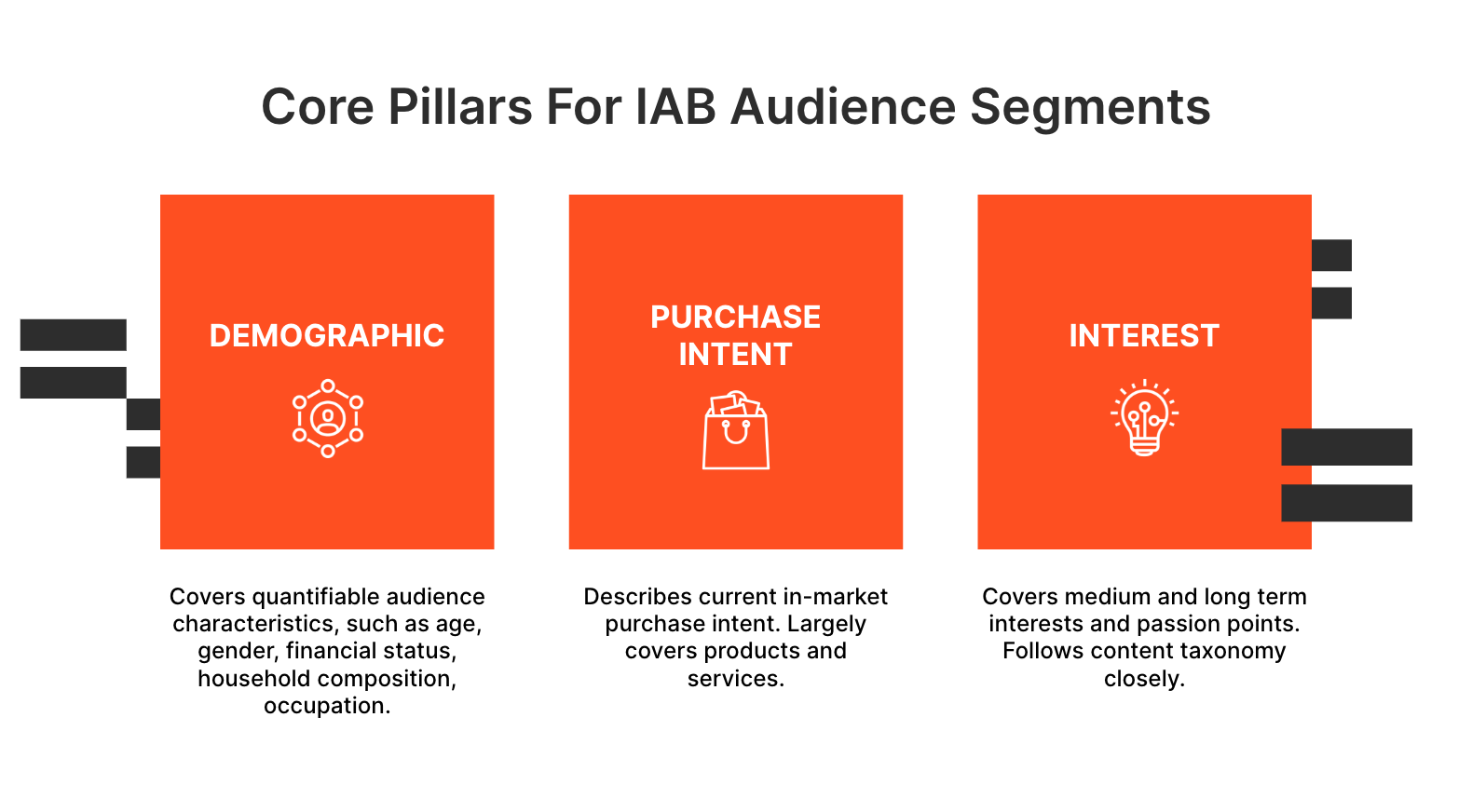
Publishers, with or without the help of their DMP, must map their first-party data into standardized demographic, purchase intent, and interest audience segments following the IAB Tech Lab’s Audience Taxonomy 1.1.
This includes 1600+ tiered segments that provide a common naming convention and taxonomy, allowing normalization, uniformity, and comparability across SDA from different providers. In addition to audience signaling, SDA can also support contextual and content signaling, but both use cases have yet to be standardized for industry use.
2. Documenting SDA Metadata
Publishers include the segment ID and taxonomy ID in the ad call using their ad server or the header bidding wrapper following IAB’s Data Transparency Standard (DTS). Or then can leverage a prebid RTD (real-time data) module created by a data provider.
3. SDA Activation
Publishers can activate SDA on the SSP level for buying on both open auction and PMP. In the first case, the SSP must relay the SDA metadata in the bid request. In the second, SDA can enrich direct deals and cross-publisher auction packages.
4. DSP Bidding
Upon receiving the bid request, the DSP will be able to read the included SDA metadata, segment, and taxonomy IDs and decide whether to bid on the ad call or bid on an SDA-enabled Deal ID.
On the advertiser side, SDA allows buyers to leverage publisher-standardized first-party data without the need to contact each provider to create one-to-one deals. Streamlined and scalable access to pre-packaged cohorts through deals or via Open Auction will drive the usability of publisher first-party data, ultimately making it more appealing for advertisers.
Opportunity exists, but publishers will need to be a driving force
By offering standardized, scalable, and easy-to-activate audiences, publishers can unlock new revenue streams and efficiently monetize their first-party data. However, the benefits of SDA will only be fully tangible when there is significant adoption of the IAB-sponsored specification across both publishers and advertisers.
The adtech platforms also play a big part in driving the use of SDA. As mentioned, SSPs need to be able to transmit SDA in the bid request, whereas DSPs should be trained to recognize SDA metadata to allow the selling and buying of data-enriched inventory.
Publishers can enlist help from DMPs to segment and map their user data to standardized cohorts. And the rapidly evolving data clean room solutions will further empower data collaboration between providers bringing cross-publisher SDAs to the market.
Curated marketplaces may prove to be indispensable in further streamlining SDA adoption. It offers publishers an easy yet controlled channel for distributing data to many advertisers. Given its advanced deal management capabilities, curation will lower the entry barriers for publishers who are not yet ready to share segments transparently on the open market but want to access large-scale demand for their SDA.
Publishers, with support from their SSPs and other tech vendors, will serve as the main driving force for educating the market and driving the adoption of SDA. This is an exciting new addition to existing addressability solutions and embracing it will benefit the entire industry. When paired with other solutions, SDA can significantly ease the transition to the soon-to-be cookieless world and help publishers maximize ROI while remaining in control of their first-party data.
Despite industry angst over the impending demise of the cookie, the fact is that third-party data was never that reliable to begin with. These two factors have made publishers sit up and think about their data strategy.
Should they rely solely on first-party data? Or should they look to augment with second-party data? (Second-party data refers to another company’s first-party data from their own subscribers, app users, website visitors etc., but with personally identifying information removed.)
For those looking to enhance their first-party data by tapping into other sources, data clean rooms are proving an increasingly viable solution. In fact, over a third of publishers are more likely to use them than marketers (48% vs 37% respectively).
What’s more, in an attempt to dispel confusion over them, IAB Tech Lab has announced plans to release its first Clean Room Standards by the end of 2022.
But how can you tell which clean rooms provide the high-quality, privacy-compliant data you need to inform your most important ad ops or revenue decisions? How easy is it to invite your brand partners to collaborate? And can you actually activate your campaigns from within a data clean room?
Here are the main characteristics that you should look out for in a clean room:
1. End-to-end data management workflow
As anyone who uses any management software will know – from project management to data management or finance – there’s nothing more infuriating than having to log out of one system and into another to manage your workflow.
Therefore, having an end-to-end workflow in one place is crucial for efficient operations. Opt for a solution that gives you complete control of your workflow and has easy integrations with your existing data automation software.
2. Purpose-limited “rooms”
The whole idea of a clean room is to create a safe, secure, and purpose-limited environment for second-party data. What we mean by “purpose-limited” is that you only have access to the specific type of data you need, rather than a whole bunch of data that is likely irrelevant. For instance, you can open a clean room for targeting, or one for measurement, or perhaps attribution, and invite your trusted partners to access the (anonymized) data. In each case, the data gets specifically matched to your use case.
This is in the consumer’s interest, as they know that their data will only ever be shared for the purposes for which they have given explicit consent (according to legislation such as GDPR or CCPA). However, it also means that, as a publisher, you only get the data you really need to make informed decisions.
3. Interoperability
The problem with certain data clean rooms today is that all participants must subscribe to (i.e. be a customer of) that clean room. Naturally, this can limit opportunities to collaborate (or it requires unnecessary time/expense to set each party up as a fully-fledged customer of the data clean room).
For instance, as a publisher, you will likely be looking to collaborate with your brand advertisers on projects such as creating ad campaigns for targeting, or creating analysis matches for forecasting purposes. But at the same time, you don’t need the hassle of persuading them all to become a customer in order to join your clean room.
Therefore, interoperability is an important feature of a clean room and you should look for a provider that has an open data infrastructure, allowing you to invite your brand partners to collaborate at will.
4. Activation
Gaining access to relevant data, and collaborating with your partners, is half the battle. But what happens when it comes to activating your data for campaigns? The ability to easily integrate with programmatic and other ad delivery systems – for instance GAM, The Trade Desk or DV360 – is just as important as getting access to the data in the first place. Without this activation functionality, you’ll need to build your own integrations, requiring huge engineering resources.
Therefore, you should look for a clean room provider that allows you to connect to these pre-integrated platforms, activate your campaigns, and start targeting your audience. These activities should all occur directly from the clean room, without actually moving your data.
The best place to begin is with your own first-party data. But for many publishers, augmenting with second-party data can provide deeper insights into the target audience. As long as you partner with a data collaboration platform that includes interoperability and activation capabilities as standard, the process shouldn’t be as daunting as it might at first seem.
About the author
Navid Nassiri joined Switchboard as Head of Marketing in 2021. Switchboard’s data engineering automation platform aggregates disparate data at scale, reliably and in real-time, to make better business decisions. In his role at Switchboard, Navid is focused on driving growth and brand awareness through innovative marketing strategies. Navid is a seasoned entrepreneur and executive, including leadership roles at PwC and NBCUniversal.
As the fight for attention and viewership intensifies, more media companies have diversified their strategies to include ad-supported models. This allows them to scale their advertising offerings and capabilities within the OTT streaming category.
What’s up with OTT?
OTT, short for “over-the-top”, refers to the streaming of media over the internet. According to a study by eMarketer, 1.88 billion people around the world will use sub OTT services like Netflix, Disney+, and Amazon Prime Video. However, that same report also mentions that fewer than 50% of internet users worldwide are watching programs via OTT, which proves that there is much opportunity for growth in the category.
Historically, OTT and streaming companies primarily focused on subscription-based models. However, as subscriptions plateaued, ad-supported revenue models have gained traction and become more mainstream. This broadens the reach of streaming to the many consumers who are unwilling to subscribe to content, but still want to view it.
OTT’s impact on advertising trends
OTT streaming models are impacting advertising trends in several ways. First, given the proliferation of offerings, there is increasing competition for ad dollars. We are starting to see this competition now, particularly as ad spend and targeting costs increase across the market.
As the market evolves, inventory quality is also quickly becoming a hot topic. From a pure supply basis, do providers have enough inventory to reach targeted audiences at scale? The irony of targeting is that as targeting specifications increase, addressable inventory starts to decrease.
Additionally, when it comes to scaling, it happens in two ways: one is through actual ad sales based on inventory and that inventory being sold directly by the OTT platform. The other way is though parent companies and alternate organizations selling premium inventory on behalf of the media or streaming platform. When this occurs, all that remains to be sold are the remnants, thus raising the question: what does one do with the remaining inventory? With this comes a deeper discussion of fragmentation of inventory and data, which will impact omnichannel planning and overall scalability for many teams.
Advertisers are leaning into OTT streaming as a critical part of their digital media mix to extend their marketing reach and increase ROI. As competition for ad space elevates across streaming and OTT channels, we will see agile media brands continue to develop new, unique ad products that will be sought out by advertisers to bolster their omnichannel strategies.
Opportunities for OTT advertising success
While all streaming media companies have their own content and audiences, not all can come up with new, innovative ways to appeal to advertisers. To succeed in an ever-evolving ad monetization market, media brands must develop new ways to package their content and reach audiences based on unique user data points like content consumption preferences, to avoid becoming commoditized.
Additionally, top OTT streaming companies are working to elevate their ad models to create non-intrusive and enhanced user experiences while also keeping their ability to scale advertising models and targeting capabilities, which helps ensure success for their advertisers.
Advertisers that want to target niche audiences at scale, when and where they spend their time, will be looking to streaming and OTT companies to fulfill their needs. Ad-supported OTT streaming models are becoming increasingly more mainstream as consumers take advantage of the lower-priced option. This results in a larger user base, which in turn provides a better opportunity for advertisers to reach their target audiences at scale.
Therefore, media executives need to remain agile and prepare to accommodate these shifting strategies of advertisers that will include an increased ad spend within the OTT streaming category. By implementing an ad-supported streaming model and developing new ways to reach segmented audiences and engaging content packaging, media companies will be able to do just this. And the result will be increased ad inventory and diversified revenue.
As OTT streaming media platforms enhance their capabilities with AI and automation of their workflows, their targeting and success rates will increase. This will make OTT the ideal platform for advertisers to leverage when expanding their omnichannel strategies. Ultimately OTT streaming ad-supported models present a prime opportunity for media brands to expand product offerings and diversify revenue through niche audience targeting, premiere ad space packages, and scalability for their advertisers.
When brands connect to consumers through advertising content, it has an impact beyond selling products. Consumers are highly aware of what brands say, and what corporations do to support diversity, equity, and inclusion. Pragmatically, inclusive marketing makes sense, but how well is “purpose” integrated into the brand experience? A new report, LGBTQ+ and the future of CX from DISQO and Do the WeRQ, explores how people factor brand purpose into their purchase journey decisions.
DISQO and Do the WeRQ surveyed more than 9,000 people to explore the consumer experience with LGBTQ+ advertising content.
Marketplace
LGBTQ+ is the fastest-growing minority segment in the U.S., with an estimated $1.4 trillion in annual spending. The Human Rights Campaign Foundation (HRC) used U.S. Census Bureau data to estimate that at least 20 million U.S. adults identify as LGBTQ+. That’s nearly 8% of the adult population. Additionally, about 21% of Generation Z in the U.S. identify as LGBTQ+.
Getting involved
This research shows that nearly three-quarters (74%) of people believe brands should get involved in social issues like DE&I, racial equality, gender equality, and social economics. Brands involved in diverse communities are recognized by consumers. Approximately 37% of participants in this research recall seeing LGBTQ+ ads outside of content made specifically for the community. Forty-seven percent of participants recall seeing ads within LGBTQ+ content. Those identifying as LGBTQ+ are more likely to recall seeing ads in content made for them (57%) but are less likely to recall seeing them in mainstream content (33%).
Almost half of those surveyed (46%) agreed or strongly agreed that advertising is adequately inclusive. More than half (52%) said LGBTQ+ ads felt “authentic.” Notably, 64% of people identifying as LGBTQ+ agreed that ads depicting their community felt authentic. However, older consumers are less likely to say that more LGBTQ+ content should be created.
Consumers recognize that brands are influential, and many want to see them exercise this power in support of the LGBTQ+ community. Eight in ten (81%) participants identifying as LGBTQ+ said that brands have some or a lot of influence. Close to half report that brands are essential in bringing about LGBTQ+ progress.
When asked if they ever think about a company’s social and political activities when making a purchase decision, 85% said they did. Less than 15% of people said they never considered this when purchasing.
Generationally, those under 44 years of age are more likely to align a brand’s social influence with their wallets: 18-24 (58%), 25-34 (58%), and 35-44 (57%). Further, 22% of those under 24 said they “always” think about where a brand or company stands when making purchase decisions, 24% for 25-34 and 25% for 35-44. The percentages decline as age increases, with only 12% of people 65+ saying they have these considerations.
Targeting content to LGBTQ+ is growing; this year, fewer people report “not seeing” any LGBTQ+ advertising versus last year (7% versus 20%). The line of cultural margins is shifting, and representation across media platforms offers more racial equality, gender equality, and social economics. LGBTQ+ visibility goes far beyond shout-outs in June. More representation of LGBTQ+ in advertising shows consumers that you see and value them.
We’re in the busiest — and traditionally, the most profitable — weeks of the year for retailers and publishers alike. And while we’ve seen plenty of unusual conditions over the past few years, the 2022 shopping season is creating a whole new set of challenges.
Publishers can typically rely on strategic diversification to broaden their earning opportunities and mitigate the effects of economic uncertainty. However, the current market conditions are wreaking havoc on two of the most common income streams for publishers: programmatic advertising and affiliate marketing.
Advertising: Our research found year-over-year programmatic ad rates were down across the board in Q3 2022. In the US, CPMs were down 15%-20% versus 2021. The drop was even sharper in the UK, where the death of Queen Elizabeth in September prompted many brands to pause their ad campaigns.
Affiliate: During the same period, affiliate conversion rates in the U.S. were 25% lower than 2021 and a full 50% below 2020 levels. Earnings per click were similarly affected, as inflation continues to shrink consumer wallets.
7 tips to maximize revenue through year-end
Despite these challenging conditions, there’s still a wealth of opportunity for smart publishers this holiday season. After all, Deloitte is projecting a 4%-6% increase in holiday retail sales for 2022.
The keys to success this year? Start by understanding the current market conditions, then optimize your advertising and commerce efforts to help capture every revenue opportunity.
To maximize the value of your ad inventory, you need to optimize your pricing strategy. But first, you must understand the factors that buyers use to shape their bidding strategy — including ad attributes, page attributes, and user attributes. While each individual buyer will weigh these factors differently, knowing which variables they consider will help you set an appropriate price floor.
3. Focus on promotions
Discounts are expected to hit record highs in 2022 as retailers attempt to offload surplus inventory and attract consumer spending. With brands deliberately lowering prices and consumers looking for deals, you’ll likely find more affiliate success by offering popular products at reduced prices rather than specialty items or limited-edition merchandise.
4. Maintain high ad quality scores
Don’t dilute ad quality for the sake of increased frequency.Adding more ad units to the page or employing aggressive refresh practices will impact the rates you can earn, both short-term and long-term, as buyers will price down your inventory. Even worse, you could find your side blacklisted from future campaigns.
5. Test different commerce strategies
With constantly changing market conditions, it’s hard to predict what will resonate with readers this season. Experiment with different content strategies and be prepared to pivot quickly when you find something that works. Test a variety of content elements, including link placement, product photos, and content length. And give your audience convenient, flexible ways to shop — like shopping galleries and price comparisons — to make holiday buying as painless as possible.
6. Grow ad deal revenue
If you have existing relationships with ad buyers, leverage them to maximize revenue. Ask demand partners which audience segments, context, and inventory most appeal to them, and then package up deals to hit their objectives. If you don’t have direct buyer relationships, talk to your SSP partners. Make sure they add you to all applicable deals based on either their own measurement criteria or signals you can send from your site.
7. Keep up with ever-changing affiliate deals
This year, merchants will be pulling out all the stops to entice consumers to buy, so deals will change often during this critical time. Make sure you have up-to-date information on all the latest promotions, deals, and coupons to optimize your affiliate efforts this holiday season.
The takeaway
Whether your monetization strategy is focused on advertising, affiliate marketing, or some combination of tactics, the 2022 shopping season offers plenty of opportunities — if you know where to look. Stay nimble and keep on eye on the data to maximize your revenue opportunities. Here’s to a successful holiday season and a profitable New Year!
About the Author
Rebecca Cole is Vice President of Marketing for Sovrn, a publishing technology platform that provides advertising tools, technologies, and services for content creators to build their businesses, remain independent, and thrive on the Open Web. Rebecca has more than two decades of experience driving increased attention through purpose-driven content. She has held communications positions in tech, energy, and consumer brands and was a journalist and editor. Rebecca has an undergraduate degree from The University of Iowa and a master’s degree in journalism from The University of Colorado Boulder.
Amid growing uncertainty about the economic environment, it is wise for publishers to consider how to thrive and strengthen their revenue during the potential downturn. With economic uncertainty ahead, it is vital to understand how brands look to invest in marketing during 2023 to build a portfolio of offerings that support these strategies.
The situation
Typically marketing budgets decrease during an economic downturn. However, based on research done by Deloitte earlier this year, marketing spend has grown substantially over the last year. And, despite uncertainty at present, some bright spots stand out.
In the same Deloitte study, marketers stated they plan to increase their spending on DEI initiatives by 10.8% on average. And Hubspot reports that 83% of marketers are investing in higher-quality content. They also report that 80% of marketers expect to maintain or grow their budget for various inbound marketing activities – including content marketing, SEO, social media, and more – to reach and influence consumers at every stage of the buyer’s journey.
This data shows us that publishers would be wise to strengthen their content offering. These can include native advertising, sponsored content and even contextual targeting, all of which are ideal to help brands deliver their stories across publisher channels to reach these audiences.
The consumer perspective
Even at a potential downturn, brands seek opportunities to attract, delight, and engage. Therefore, it is essential to consider the reader and consumer preferences to support these efforts. So we must ask ourselves: what do consumers prefer?Ultimately they want to focus on the content they are trying to consume.
According to an eMarketer report, over 40% of American adults think online ads seem to be aggressively following them. And this has led consumers to take control of their digital experience, with close to 47% of internet users now using ad blockers because they think there are too many ads online, according to GlobalWebIndex.
However, according to a survey by Time Inc, close to 90% of younger internet audiences from Gen Z, millennials, and Gen X say that they prefer custom content, including native ads online, instead of traditional ads. This is an opportunity.
This data shows that consumers are actively seeking ways to improve their web browsing experience and limit the distractions from the content they are seeking. We believe this will lead advertisers to start looking for strategies that do not distract from the reader experience to reach these consumers and improve campaign performance.
A crisis of trust
Unfortunately, these days display ads just aren’t that effective: click-through rates are at just 0.05% across all platforms. This decline started years ago, and it is because consumers have lost trust in display; in fact, over 54% of users say that they don’t click banner ads due to a lack of trust.
Now, let’s look at social media. One reason that platforms like Facebook have come to dominate digital advertising is that they are able to provide advertising experiences that are seamlessly integrated into the consumers’ content. They offer opportunities for long-form editorial engagements, lower funnel activities like click-to-download, and short-form top-of-funnel branding executions, such as Instagram stories.
But the reviews of social channels are not all bright either. Consumers increasingly distrust social platforms. According to Statista, 66% of consumers express concern about the accuracy of the content they see on social media.
Even with this in mind, however, marketers are looking to invest more in short-form content. Hubspot found that 33% of B2C Marketers already invest in short-form content. While another 33% have yet to, but plan to do so for the first time in 2022.
What we see is that there is an appetite for this content. And, given growing distrust in social media, brands may be actively seeking ways to scale their efforts on the open web.
What do publishers offer to the industry? Trust
Publishers have built a robust ecosystem and relationship with their audiences. As we have said before, this trust can be utilized as a point of differentiation, especially when competing against programmatic offerings. When ad dollars are invested into more strategic initiatives, publishers must lean into the inherent trust they have built with their user base.
To thrive during any potential downturn, publishers need to create offerings that support the strategies brands are investing in for 2023. At the same time, they must maintain the inherent trust they have built with their audiences. To do that publishers must consider the following:
Privacy First
Focus on solutions that don’t rely on third-party targeting. Rather than using invasive data practices, use content to attract, delight, and engage. This allows you to provide contextually relevant advertising solutions so brands meet their customers where they are in the purchasing journey.
Prioritize Premium
Brands will look for unique ways to reach their customers, break through the noise, and remove the blindfolds of banner blindness. For digital publishers, that could mean leaning heavier on executions, such as sponsored content that allows brands to tell their stories, from new products to use cases and any DEI initiatives. Give brands the ability to scale their story beyond their audience and benefit from the trust publishers have built with their readers.
Integrate Short-form Content
As mentioned above, brands seek to invest in short-form content. To build a diverse revenue portfolio, publishers can offer solutions to run executions similar to Facebook and Instagram stories or TikTok’s short-form videos. This will allow advertisers to scale these strategies outside social channels within trusted environments.
With a downturn ahead, or not, aligning to meet brands where they are seeking to invest in 2023, will result in a win for publishers. Understand that content moves the needle for consumers. Advertising that places quality messages within trusted content will rise above the clutter. In particular, short form content offerings will allow publishers to integrate the social environment brands are seeking into the publisher site experience.