In recent years, global publishers have shifted their focus on the ties that bind loyal readers and their propensity to become subscribers. Therefore, we wanted to better understand loyal reader behaviors, starting with an analysis across devices and distribution channels. Here’s what we found.
Loyal readers no longer tethered to desktops
Believe it or not, loyalty is actually higher on mobile than desktop when we analyze our global publisher data.
Across the board, mobile visitors show more loyalty. We see the accessibility of these devices — a 24/7 window into what’s going on at any moment — driving this trend. This does not mean desktop traffic is going away, it’s just often tethered to a single place (e.g., work or home), whereas your mobile device moves with you all day long.
When looking at weekly visits by traffic sources across mobile and desktop experiences, we saw that app direct visitors are nearly 6x more loyal than platform visitors.
This finding begins to make more sense when you think about publishers’ renewed focus on mobile experiences. Particularly when you consider the fact that the overall number of visits taking place on mobile increased by more than 20%.
Where visitors are finding apps and how it impacts loyalty
Visitors coming to apps via deep links or direct traffic on the web do so three times more often than platform visitors, as we see below. That said, our research found that at this point loyalty is roughly the same when it comes to the major platforms (i.e., Facebook and Google Search).
What our channel loyal findings mean for content creators
“Subscription is an act of loyalty, and readers need some way of developing that loyalty and affinity for a publication before they’re likely to pay,” Josh Schwartz, our Chief of Product, Engineering and Data Science, recently told Nieman Lab on the topic of reader revenue and loyalty. The data we outlined in this piece suggests that publishers are increasingly aware of this journey to develop loyalty, using multiple channels (and increasingly, mobile-first experiences) to grow these relationships over time.
A few other takeaways from the research:
Shift in app experiences suggests new paths to loyalty
The data suggests that loyal readers want a direct path to publishers — a huge indicator that there’s value in improving app and direct to mobile experiences. That being said, friction along the mobile journey poses a massive hurdle in getting even loyal readers to move closer to subscription.
Platforms still have a prominent role in loyal readership
Yes, we’re seeing an interesting shift in visitor patterns that favor direct visits to apps. Yet, loyal readers are still coming from Google or Facebook. Our recent research shows that there’s still a case to keep your platform presence top of mind.
Movement matters when it comes to device-based loyalty
Loyalty among mobile visitors is growing rapidly. This finding makes sense when you think about today’s mobile-first readers. Don’t go abandoning your investments in desktop, especially since we still depend on this experience every day.
Overall, we see that loyalty among mobile visitors is growing rapidly, which makes more sense as we think about today’s mobile-first readers. Moreover, it points to an important shift in audience behavior — loyal readers want a direct path to publishers. This tells us there’s still a massive opportunity to improve app and direct to mobile experiences.
In case you missed it, just about everyone has been predicting the death of 3rd-party cookies for almost a year. Now, Apple has closed loopholes with ITP 2.3. Mozilla, Brave, and Chrome have grossly restricted or eliminated the use of cookies. And Google has further committed to eliminating all 3rd-party cookies along with UA parameters within the next two years.
What’s more, the loopholes long used to circumvent these regulations are closing quickly and will likely be almost completely eliminated in the future. Even new ones that pop-up will likely be quickly snuffed out as these practices roll-out throughout the digital ecosystem.
For digital publishers, this raises a lot of questions. Isn’t the personalization provided by 3rd-party cookies better for advertisers? And, isn’t that what is required to maximize the value they are willing to pay publishers?
Revenue concerns
We’ve heard Google recently tout research that says personalized advertisements are more highly-valued than non-personalized contextual ads. That would seem to paint a bleak picture for publishers. However, keep in mind that Google is one of the few parties that can offer scaled first-party data and may be inclined to view this issue with bias.
With that being said, many still wonder that in a world without third-party targeting, how are publishers going to be able to deliver an audience to advertisers that are as valuable as the ones they’ve become used to? And at the end of the day, publishers want to know if they can make as much money as they were before from advertising.
Consider the source
Publishers need to take a step back and look at the premise of all this and ask, “Am I being manipulated by parties in the space to believe that I am going to lose value selling the exact same thing as I am today?”
The big change in the ecosystem will come to the third-party targeting system as a whole—and that’s an advertising system. The system being affected is largely going to be the programmatic one (buying and selling inventory using online systems, like Google Ad Manager). Publishers are simply leveraging the advertiser’s system to sell their inventory in an easy and cost-effective format.
This isn’t to say that publishers get to sit back and relax. In fact, publishers might have to find a new way to market that audience to the advertisers. However, if we look at the shifts in spending for advertisers, there’s no slowdown in digital ad spend. Given that spending is going up and your audience remains the same, publishers should have a fair amount of optimism.
Winners and losers
Google is already using cookieless tracking. The same can be said for many other major ad exchanges and ad networks. The advertising market has continued to grow and the money flows to the eyeballs, no matter what. When those eyeballs are on a TV ad for the Superbowl (obviously without cookies), the money flows there. That revenue is driven by the opportunity for advertisers to reach an audience they know is unique.
For advertisers, this is where they lose a little bit. They will have to work much harder in identifying what makes their audiences unique and where they can put their dollars to ensure they’re still able to capture them. This means trying new systems and methods.
In the realm of programmatic advertising, Google has the largest reach, a hold on the industry’s most effective tools, the most user data, and they’re incumbent at just about every layer of digital user experiences. It’s hard not to see them as the biggest winner in all of this.
Publishers’ position
The vast majority of the internet is potentially going to lose personalized cookie targeting. The good news is that publishers are more important than ever before. Your audience, your data, and the material relationship you have with them are more important than ever. And the value that comes along that is only poised to increase as time passes.
The only thing you should fear, given the death of 3rd-party cookies, are the players that will inevitably come out of the woodwork. They’ll tell you that the upcoming cookie changes are of reason why you need to pivot your strategy, need to leverage this company, or this third-party network, because they have great personal relationships with X network or Y direct advertisers.
Basically, they’ll say: Sell your audience to us and we’ll resell it to advertisers. It’s the only way to save your business. It’s in these players’ best interest to grow their first-party data and they need you to help them. Beware these pitches. Instead, rely on doing a good job of engaging with your audiences and understanding who they are.
My last piece of advice is this: Protect the relationship you have with your audience because it’s only going to get more valuable as time goes on.
There’s a blackhole in the video game universe. A massive, bare chest Jeff Goldblum is lounging on a London lawn near a bridge. And the golden arches have inverted.
Surely some sort of revelation is at hand!
Oh no wait: It’s just brands going viral.
Inspired by Fortnite’s bold strategy of taking the massively popular game offline for nearly two days to tee up the release of a new virtual world, we decided to investigate several so-called “publicity stunts” to see which ones were the most impactful in generating reader engagement.
To do this, we checked how these campaigns impacted readership about the companies on the Taboola network of news publishers. We’ve seen that successful marketing can often generate significant news coverage and create a viral effect.
Taboola’s data include readership of more than 1,300 US news websites including national, local, and digital-native organizations. The scope of the network offers a broad view of what’s capturing people’s attention.
With that in mind, let’s see which stunts sparked the biggest spikes.
The Fortnite black hole
Fortnite has become one of the rare titles of this generation to transcend gaming to become a cultural phenomenon. Its player base has expanded into the hundreds of millions over the past two years.
Naturally, people totally freaked out when the game’s universe was sucked into a black hole leaving behind only a dark screen and a cryptic string of numbers.
“It then, to the internet’s collective shock, stayed that way. Confused players joined forces to decode mysterious numbers, play a hidden minigame, entertain themselves with speculation, and spend more than 35 hours staring at what basically amounts to a screensaver.”
Haven't been keeping up with Fortnite? Well, good news, you haven't missed much—except, oh right, the whole game is a black hole now? It's probably fine. pic.twitter.com/zzwqQW5yYl
It didn’t take long for people to realize that this was the game’s way of teasing the beginning of a new season and the introduction of a new world for players to shoot to control.
In the meantime, millions of people read news articles about the phenomenon. We saw readership spike more than 10x above its daily average.
International house of what now?
Who doesn’t love IHOP? The food is decadent. The blue roof is iconic. And “Rooty Tooty Fresh ‘N Fruity” is honestly one of the all-time great names for a menu item.
You could invert three of the letters in IHOP and not a thing would change. But when the company inverted that fourth letter, a great mystery ensued.
IHOP is changing its name to IHOB and while people think it stands for “breakfast” I’m putting my money on BETRAYAL
After several days of anticipation, “IHOb” revealed the b stands for burgers because, yes, they also serve burgers. A month later, IHOP admitted the supposed name change was a gimmick all along.
Readers seemed to find the gag palatable. Traffic spiked like an 8-year-old’s energy level after eating IHOP pancakes with blueberry syrup.
WcDonald’s
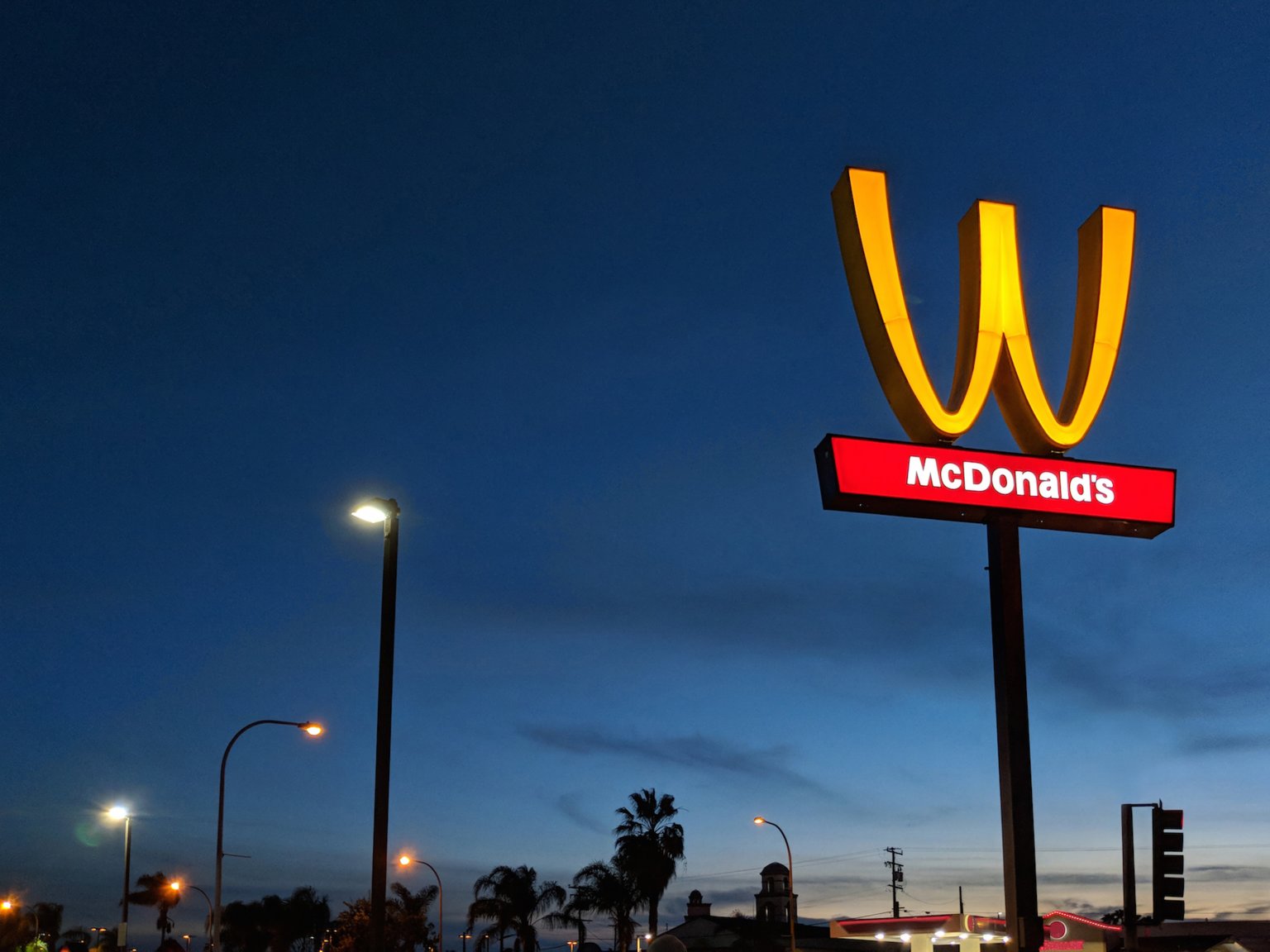
IHOP isn’t the only food chain to cause a stir by inverting its branding. A McDonald’s in California flipped the golden arches in honor of International Women’s Day and the company changed its logo on its social media channels to match.
McDonald’s said this gesture was meant to recognize “the extraordinary accomplishments of women everywhere and especially in our restaurants.”
(Credit: McDonald’s)
We saw increased readership about McDonald’s related to this move. But it was not necessarily a triumph of publicity. The gesture received harsh backlash as people criticized the company for the wages it pays its workers.
Payless pranks influencers
Fashion influencers flocked to Palessi’s popup shop in Santa Monica, California, to sip champagne and try on shoes listed for up to $1,800. The line to get in extended well out the door. Photos were posted to Instagram.
No one suspected the supposed luxury kicks normally sell for as low as $20 until discount retailer Payless ShoeSource revealed it was behind the entire production.
Well played, Payless.
The farce earned a big bump in readership for the company. Unfortunately, the spike was overshadowed a few months later by the news that Payless was imminently closing all of its US locations.
The electric car company was able to pull off this extraterrestrial feat because of its association with SpaceX (since Elon Musk founded both companies).
So when SpaceX needed to show off the capabilities of its Falcon Heavy rocket during a 2018 launch, it brought along the Tesla as the payload to add some extra flare to the event.
How epic was this stunt? Business Insider’s Mark Matousek wrote, “Tesla created the world’s best car commercial without spending a dime on advertising.”
Both companies saw significant bumps in readership around this event.
Pizza and potholes
Most of us likely have experienced the utter disappointment of receiving a pizza from a delivery person, only to open the box and see a pie that looks like it’s reached us via a carnival ride.
Domino’s created its “Paving for Pizza” campaign aimed, perhaps symbolically, to address this issue by fixing potholes in towns across the US. In theory, this would create a smoother ride for their delivery people.
A road condition meter on the website promoting the campaign shows the supposed carnage various degrees of road disrepair wreak on pizza.
This campaign did not see the same type of traffic spike as the others. When it launched in June 2018, there were a number of stories that caused a small bump in activity as indicated by the red arrow in the chart below.
It’s possible this campaign had more of a slow burn effect though. It seemed to create increasing buzz at the local level as it expanded to new towns.
And despite the lack of readership at launch, there were a number of positives. PRWeek highlighted the campaign’s success on social media. It also covered the sheer number of requests the company received from towns that wanted to be part of the program, which included over 15,000 zip codes.
Sex sells, but at what cost?
Your scientists marketers were so preoccupied with whether or not they could, they didn’t stop to think if they should.
If the advertising maxim “sex sells” is true, then this one might be the new gold(blum) standard. See for yourself.
25-foot Jeff Goldblum statue pops up in London, England, recreating the actor's famous bare chest pose from "Jurassic Park" in honor of the film's 25th anniversary. https://t.co/3sTSdzw5Uapic.twitter.com/DQlGYRhVGc
The British streaming platform Now TV was behind this monumental stunt.
Unlike the other companies we’ve discussed so far, we didn’t actually see a spike for now Now TV when measuring readership in the UK. Taboola’s semantic AI looks for terms in headlines and the first few paragraphs of a story to categorize them into topics. Since Jeff Goldblum is such a big star, most of the story headlines about the statue gave him top billing and mentioned that it was organized by Now TV deeper in the stories.
With this in mind, we also looked at news stories about Jeff Goldblum and did find a bump in readership when the statue first appeared. As you can see below, it wasn’t the biggest Jeff Goldblum news of the past two years. That honor went to the revelation that Goldblum, Laura Dern and Sam Neill would all appear in the next “Jurassic World.”
The competition is fierce for the attention of readers and customers.
The stunts that not only successfully garnered “earned” media for brands but also significant audiences for those media sites can be categorized into three themes: providing a public service or pushing for social good (Domino’s/McDonalds), generating intrigue (Fortnite/IHOP/Payless), or creating a spectacle (Tesla/NowTV).
The successful stunts for brands were the ones that best aligned with their public image. A lighthearted brand like IHOP with playfully named menu items can get away with shenanigans if it’s all in good fun. While Tesla and SpaceX, both known for being on the cutting-edge of technology, took those reputations to the next level with the space car stunt.
Journalists have the important responsibility of giving readers context about these stunts and holding brands accountable when their plays for attention miss the mark. However, when done right, these stunts not only deliver significant PR, they drive interest and traffic for media companies as well.
Note: Taboola’s news publisher partners have access to data on trending topics in the Topic Insights part of Newsroom, a real-time audience analytics platform. There’s also a publicly available version of Topic  Insights on the Taboola Trends page.

Taboola is always looking for interesting ways to use data to help bring context to how news readers are interacting with real-world events such as measuring which presidential candidates are getting the most attention and measuring the huge impact of a coordinated media effort to increase climate change coverage. Please DM @franberkman on Twitter if you’re doing any research or reporting that you think this type of data could help support.
As a 20-year marketing technology and media vet, I must tip my cap to data management platform startups for bringing new energy and interest to the needs of publishers and their commercial partners. We face an ever-changing media landscape characterized by fragmentation in delivery channels, evolving consumer consumption behaviors, and privacy regulation. To navigate it successfully, we need to focus our time and effort on finding innovative and effective ways to connect, enrich, and activate consumer data for publishers in a manner that respects consumer privacy and empowers choice.
I admire the marketing prowess and focused messaging of these data management platform (DMP) companies. However, I can’t stand by while they purposely and repeatedly mischaracterize technical capabilities and confuse publishers (and media outlets) on the facts related to profile identifiers, browser storage mechanisms, privacy compliance, and “match rates.”
In a series of three pieces, I will set the record straight. This
first piece will focus on the facts on profile identifiers, browser storage
mechanisms, and their relationship to privacy regulation.
The facts about profile identifiers and browser storage mechanisms
If I had a dime for every time I’ve heard the term “cookieless
DMP” in the last year, I’d be a very rich person. This is purely a marketing
term with no basis in fact or function. If we’re talking about data management
technologies that are operating in a web browser context, then there is no such
thing as a “cookieless DMP.”
PIDs
All data management technologies — including DMPs — use profile
identifiers (“PIDs”) in a web context to organize and connect consumer data. A
PID is typically a string of randomly generated letters and numbers. By itself,
a PID usually has no information that can directly identify an individual in
the real world.
In a web browser environment, these PIDs can be stored using one
of three browser storage mechanisms. These are: 3rd party cookies, 1st party
cookies, or browser local storage (sometimes referred to as HTML5 web storage).
It’s important to understand that a cookie is just a storage mechanism (a text
file), and you put a PID string inside the cookie.
1st and 3rd parties
Many years ago, DMPs primarily stored PIDs in 3rd party cookies
because they provided a consistent and scaled container to access PIDs across
websites and over time. In 2017, Apple released
their Intelligent Tracking Prevention (“ITP”) functionality in Safari. It blocked
the setting of 3rd party cookies by default and made that storage mechanism an
ineffective tool for storing and retrieving PIDs. As a fallback mechanism, DMPs
could use 1st party cookies to store and retrieve PIDs.
The difference between 3rd party cookies and 1st party cookies is
that 3rd party cookies can be accessed by the entity that originally set the
3rd party cookie irrespective of which website the consumer is visiting. In contrast,
1st party cookies can only be set and accessed when a consumer is visiting a
specific website domain.
So, for example, a PID that is placed in a 1st party cookie when a
consumer is visiting Publisher_A.com can only be accessed when the consumer is
at Publisher_A.com. If the consumer subsequently visits Publisher_B.com, then a
different PID will be generated and placed in a 1st party cookie that can only
be accessed from the Publisher_B.com domain. Now this same consumer has two
PIDs stored in 1st party cookies — each only accessible when visiting the
originating site.
Storage issues
Within the past year, Apple has
continued to ratchet-up the ITP restriction on cookies in Safari, and now
even 1st party cookies are being squeezed. In many situations, 1st party
cookies will now only persist for 24 hours before being deleted. As a result,
web developers — including DMPs — have increasingly used browser local storage
as a fallback for storing PIDs.
Browser local storage is a
standard technology built into all major web browsers. It allows for the
storage of larger amounts of data (e.g., HTML code) than cookies, and over
longer periods of time than cookies. Browser local storage isn’t magic
technology — it’s standard web browser technology — and using it to store PIDs
isn’t innovation.
When companies refer to their tech as “cookieless,” it
should be qualifying such as “3rd party cookieless.” It is worth noting that,
despite loud and repeated marketing claims to the contrary, these companies use
1st party cookies as the centerpiece of their platform for data collection. We
know this factually and objectively because they say so in their documentation.
The facts about profile identifiers, browser storage mechanisms,
and privacy regulation
I’m not exactly sure how the idea came about in the press that “cookieless
DMPs” are automagically GDPR compliant. However, that’s a misunderstanding that
needs to be corrected. Whether a PID is stored in a 1st party cookie, 3rd party
cookie, or local storage has no bearing on GDPR compliance obligations as a
processor for a publisher’s data.
Consumers have a set of rights under GDPR. Therefore, any
technology company processing consumer data on behalf of a publisher needs to
provide a means for publishers to transmit to such processors the consent
signals for data collection and use. They must also provide a way for the
processors to enforce those consumer consent choices. Mobile devices don’t use
cookies whatsoever in the app-space. However, publishers still need to comply
with GDPR.
Regulation
GDPR compliance obligations for a publisher-as-controller and a vendor-as-processor do not differ based on whether a vendor’s PID is stored in a 1st party cookie, 3rd party cookie, or browser local storage. Even if no 1st or 3rd party cookies were used — and if browser local storage was exclusively used — the GDPR obligations for the parties remain the same.
True forward-thinking innovation for publishers will be based upon
connecting publisher data to marketer data in meaningful ways across channels
and platforms. It requires providing the means for all parties to analyze,
enrich, and activate for commercial benefit — while always respecting consumer
privacy and empowering choice.
About the author
As Chief Marketing Officer, Adam leads Lotame’s global marketing
and product teams in helping publishers, marketers and agencies solve complex
business challenges with unstacked data solutions. His diverse experience
balances art and science. It includes stints as an aerospace engineer and
patent attorney, plus 21 years in consumer media and marketing technology in
leadership roles at Viacom Media Networks, Time Inc., Hearst, and PebblePost.
Adam is co-inventor on four issued U.S. patents related to interactive video
advertising technology.
From the boom of direct-to-consumer (DTC) brands to the introduction of new OTT streaming services such as Disney+, 2019 brought significant innovation to the digital media space. As we begin 2020, it’s time to think about which media trends will shake up the new year. Here’s what the MediaRadar team sees on the horizon.
The year of paradox for linear TV
In 2019, it was estimated that 6.4 million paid subscribers stopped paying for television. In 2020, as OTT streaming services continue to gain control, an almost equal, incremental decline in number of paid subscribers is predicted. However, despite “cord-cutting” in the TV industry, linear cable and broadcasters are poised to have a successful year. This is due in part to several major TV events set to occur throughout 2020.
The 2020 presidential election will have politicians spending significant amounts of ad dollars to get their messages across. Some estimate that spending will approach as much as $10 billion – or almost $6 billion more than the 2010 election. Advertisers are also predicted to allocate heavy ad spend towards the Tokyo Summer Olympics, as well as other large tent-pole sporting events like the Super Bowl. This year’s Super Bowl is expected to deliver strong financial results, as Fox reported in early December 2019. In fact, 80% of the inventory had already sold at a reported $5.6 million per 30 seconds. That marks a 7% jump from last year.
Amidst the evolving TV landscape, providing viewers with
real innovation will become crucial for success. Keeping that in mind, in 2020,
it’s believed that nearly all major broadcasters will either reboot or unveil
their paid streaming businesses. While this is just the start, this shows
broadcasters are committed to re-engaging with their audiences and future
proofing subscribers.
Politics’ role in digital media
An exploding ad spend isn’t the only way the presidential
election will shape the industry this year. The election is expected to take
over much of the news cycle and political ads. Every platform will be
scrutinized for accuracy more than ever before. Ahead of the election, digital
ad companies are expected to face strong public pressure to ensure their
political ad policies are tightly “buttoned up.”
Twitter recently announced they will be opting out of politics, disallowing political ads entirely. Google announced that they are restricting targeting capabilities for political ads and Facebook is predicted to follow suit, despite pressures to go further.
Based on these companies’ decisions, it’s likely that other
media will feel the same pressures in 2020. It will be up to these companies’
leadership to navigate this evolving digital landscape during the election
cycle. Foremost: an emphasis on clear and ethical business decisions.
OTT remains hot
Over the past few years, investment in the OTT space has been heavy and rapid. It shows no signs of slowing down in 2020. UBS estimates a combination of 16 media firms will spend $100 billion to produce content in 2020. Of that $100 billion, just three firms – Netflix, Disney and WarnerMedia – are projected to account for 25%, producing unique content for their viewers.
For the financial health of the companies competing in the space, it’s likely that this investment cannot last long-term. Bob Iger, Chairman and CEO of The Walt Disney Company, has acknowledged that Disney+ will probably not break even for at least the first five years. Meanwhile, AT&T has said the same of upcoming streaming platform, HBO Max.
Eventually, it’s predicted that end user prices will rise,
ad-supported models will become more common – SVOD versus AVOD – and spend on
content will decrease to ensure profitability. Being in the early days of the
streaming wars, however, the major players are willing to gamble with losses
now to gain profits later. In the fight to capture the attention, and monthly
payments of consumers around the world, and to make the investment worth it,
not all can win.
2020 outlook
2020 looks to be both an exciting and transformative year
for digital media. The TV industry will shift focus as they seek to re-engage
with audiences through paid streaming businesses and offerings. Major TV
events, specifically the 2020 presidential election and flagship sporting
events, will help sustain linear cable and broadcasters through the year.
Investment in OTT is only expected to increase, especially as “cord cutting”
continues.
Perhaps the biggest change in 2020, though, will be as a
result of the state of politics. With politics playing a larger role in the
space than ever before, media companies will begin adjusting their strategies
and policies accordingly – a change that could have a lasting impact on the
future.
The digital advertising landscape is constantly—and rapidly—evolving. Both publishers and advertisers will continue to see shifts in their businesses in 2020 as new technologies gather increased market share. Those who can harness these innovations to forge stronger connections with customers will have an opportunity to stand out from the crowd and drive revenue.
Staying on top of industry trends is crucial for brands vying for consumers’ attention. However, it can be equally challenging and time-consuming. The team at Lineup Systems compiled a list of predictions for publishers to kick off the conversation. Here are a few of the key takeaways:
Publishers will optimize for voice search
As we gain clarity on which technologies and business models signal trends rather than fads, voice technology is first in line. Voice began generating buzz in the marketplace in 2019, and its growing popularity is undeniable.
“There’s a lot of potential surrounding voice technology, and how to monetize it is the next challenge,” says Sarah Hartland, marketing manager and editor of Lineup Systems’ industry blog, the Newsroom.
It’s clear that the next generation of consumers will search for and buy products primarily through voice technology. By 2022, 55% of households are expected to own smart speakers. And voice searches are estimated to make up half of all online searches. Voice is on track to become a $40-billion channel. This means publishers need to optimize their digital content for voice search to get ahead.
“It’s very positive that publishers are having discussions around voice even if they haven’t quite nailed down how it’s going to generate revenue,” Hartland says.
Publishers will get increasingly creative with subscription models
Subscription models will continue to be relevant in 2020 and present exciting opportunities to reach audiences. Publishers need only look at the profound impact the direct-to-consumer model has had on the retail industry for inspiration and motivation.
The impressive success of subscription models can be largely attributed to personalization. The curated nature of subscriptions helps alleviate the overwhelm that consumers often experience when faced with too many choices. As a result, people are willing to pay for personalized experiences that one-off purchases simply can’t deliver.
Publishers are taking cues from the subscription box model and creating their own offerings. The New York Times kids’ print subscription is one example of an effort to get children away from screens and build brand loyalty. The Seattle Times is one of several media outlets selling subscriptions on Groupon, while The Financial Times bundles its print and digital content for a set price.
Publishers who make the effort in 2020 to understand how their audience wants to consume their content will reap the benefits of the subscription model trend.
Data privacy regulations will benefit brands
Data privacy regulation is top of mind for advertisers and publishers alike due to the California Consumer Privacy Act (CCPA), effective on January 1, 2020. Compounded with Europe’s General Data Protection Regulation (GDPR) and ePrivacy Regulation, this new law signals that data privacy is an issue the digital advertising industry must continue to grapple with. Therefore, it’s time for publishers and advertisers to get creative.
“Because publishers can no longer rely on third-party data, they have to find or build new consent management platforms with first-party data in mind,” says Tiffany Kelly, digital product manager at Lineup Systems.
It’s crucial that publishers diversify their revenue streams and clearly articulate their value to consumers in exchange for opt-in consent. This will help mitigate the impact of consumer privacy laws on their businesses in 2020 and beyond.
Contextual targeting is part of the solution, because unlike audience-based targeting, it reduces the need to use personal data to reach people and has resulted in purchase intent increases of up to 63%.
“We have to recognize this shift as a positive thing,” says Hartland. “Nuances like double opt-ins and cookies can be a pain to figure out. But it will ultimately lead to some exciting long-term benefits around industry leadership, audience loyalty, and data quality.”
Getting in the game is the only way to win
It’s true that as new technology enters the marketplace, it brings challenges with it. However, brands that can adapt can make this work to their advantage in 2020. Publishers and advertisers who can find creative ways to harness the capabilities of new tech will have an opportunity to strengthen their relationships with consumers and drive revenue.
For seven more trends that will dominate 2020, plus a list of ways you can keep up throughout the year, check out Lineup Systems’ free white paper on digital advertising trends.
A year in the life of a digital publisher contains multitudes. Ups to some felt like downs to others. But there were challenges and news that publishers of any size and any vertical faced universally—news and events that defined the entire year.
At Marfeel, we work with 850 global publishing partners, reaching almost one billion sessions every month. That means that we deal with the issues and trends that impact publishers every day. With the knowledge we have in-house, we surveyed our team to collect a list of what we consider to be the biggest publisher trends of 2019 and what they mean for 2020.
Red tape and regulation
Ok, GDPR wasn’t strictly 2019… but it’s effects are still being felt. Users continued to tick pop-ups without reading them. However, in the UK, fines in excess of $300 million were handed out to British Airways and Marriott for failing to ensure information security. A small price, perhaps, to companies of that size. However, they offer a much-needed reminder that nobody is above the law when it comes to GDPR.
The most notable regulation news came from the US, with the passing of the CCPA. This California-wide user privacy policy, touted by some as GDPR-lite, comes into force on January 1st, 2020.
Even if you argue that it’s not effective in protecting user data, it seems more regulation is coming in 2020. And with 50 different states in the US alone, publishers are going to have to find a way to cope with different levels of regulation for different users in 2020.
The great paywall question
To gate, or not to gate, that is the question publishers struggled with for 2019. We saw every variety of paywall tried and tested.
Premium publishers like The New Yorker and The Atlantic opted for soft paywalls, hoping to build consumer loyalty. Others decided to shut out all but paying customers, cleaving their audiences but guaranteeing a source of revenue. Major media groups like The Guardian and The New York Times made news with the success of their subscription models. However, the majority of publishers won’t convert significant audiences into paying customers.
The 2019 headline is that paywalls work, to an extent. Concerns grew about ‘subscription fatigue’ as many worried that audiences would grow tired of paying separately for a variety of different online services. It will be interesting to see whether 2020 crosses that tipping point and, of course, if paywalls work as a long-term proposition.
Content aggregation
Given the booming market for premium content offerings, it seems inevitable that in 2020 a true Netflix for News will emerge. People want to browse around a series of headlines. They want to be able to read stories shared by others and pick based on the story, not the brand.
No one company has managed to crack it definitively yet. But In the United States, Apple News now reaches more iPhone users (27%) than the Washington Post (23%). This is a sign that aggregation is going to gain traction in 2020.
Trust and transparency
In 2019, we learned that people don’t trust the news as much as they used to. This is makes it harder for smaller publishers to break stories and build audiences. Consumers veer towards larger media brands, which are a known commodity. It can be difficult for less well-known entities to break through, or maintain their growth.
And trust runs both ways. Advertisers and publishers both still want more transparency from SSPs and ad networks. Google’s switch to first-price auctions earlier in the year reminded the industry of the long-held last-look advantage that walled-garden exchanges can provide.
The hunt for viewability
Viewability was the hottest term in the industry for advertisers in 2019. Some publishers reacted with surprise that advertisers wanted a guarantee that their ads were actually seen by someone (and not bots).
They started to set minimum standards and refuse to buy space that couldn’t demonstrate their viewability. These standards now exceed the Interactive Advertising Bureau’s (IAB) definition of a viewable impression, which says that at least 50% of pixels must be in view for at least a second. In 2020, publishers will have to offer as close to 100% viewability and find a way to prove it to advertisers.
The creeping growth of voice tech
Alexa, how do I advertise on you?
The use of smart speakers grew from 7% to 14% in the UK last year. And usage was up +3% (from 9% to 12%) in the United States.
With voice-assistants sprouting into more homes, more content is starting to be delivered by voice. Quick answers to once-Googled questions will possibly draw traffic away from news sites in 2020. This and the growth of podcasts as a content format gave advertisers a new concern in 2020: how to bring their programmatic tech to an audio format.
The rise of Gen Z
Move over Millennials. There’s a new generation here to casually pull apart the framework of the industry.
In addition to formulating the right content to reach them, publishers have struggled to find a payment model that appeals to the younger generation. Digital natives get their news from too many different sources to be tied to a single publisher. As Adweek explains, “52 percent of Gen Z consumers will transfer loyalty from brand to brand if they find product quality to be subpar.”
2020 will see diversified revenue generation models, segregated by the audience and content types.
Cookies crumble
Saving the most worrisome for last, 2019 may be the last year of free and unfettered access to user cookies to inform advertising.
Google confirmed proposals to overhaul targeting in Chrome. And Apple went further with its online tracking restrictions. ITP 2.1 reduces the accessibility and longevity of first-party cookies, allowing them to be stored for only seven days.
Ratko Vidakovic, founder of AdProfs summarized what the move meant, “Given Apple’s aggressive attitude towards this issue, it seems like the idea of persistent cookies in Safari, for cross-site tracking purposes, will eventually be a thing of the past.”
The uncharted territories of 2020
To help paint the picture of 2020’s publishing industry to come, Marfeel is putting together the big publisher trends of 2020 report, with the help of their publisher network. By sharing concerns and challenges, the digital publishing industry can unite to create a more informed industry as a whole and overcome the challenges of 2020 and beyond.
In one sense, this is a good thing. As The Atlantic put it, “In the 17th century, ‘innovators’ didn’t get accolades. They got their ears cut off.” Modern society’s embrace of innovation has enabled a technology explosion that has taken us from the telegraph to the iPhone, carriages, to self-driving cars.
Defining innovation
However, in another sense, the overuse of the word has led to a blurred understanding of what innovation actually is. Many consider it synonymous with invention. In reality, it’s not. How your company defines innovation can determine its prospects and success. And interchanging the two ideas can mortally undermine your company’s outlook.
We come by the confusion honestly. Trusted sources such as Merriam-Webster give a convoluted and misleading explanation of the difference. Merriam-Webster defines invention as the creation of a device or process that previously didn’t exist, and defines innovation as “a change made to an existing product, idea or field. One might say that the first telephone was an invention, and the first smartphone an innovation.”
The essence of innovation
This definition misses the point in a fundamental way. The critical difference between invention and innovation is value creation. Innovation is something new or something old applied in a new way that creates new value. This is well-illustrated by the phrase, “an innovative solution.” Invention is something new that could create value, but doesn’t have to.
Another way to look at this is that innovation usually starts with solving a need (and therefore contributing to value creation). However, invention starts with solving a technical challenge (that doesn’t necessarily create value if there is no demand for the solution).
Problem solving
A classic example of this difference is the Rube Goldberg Machine, named for the cartoonist who frequently drew devices that performed simple tasks in convoluted ways. The term has come to refer to an overly complicated and usually useless contraption. It has all the markings of a clever invention, but it hardly adds value greater than the cost or complexity of alternatives. It’s not innovation.
An example of innovation is the automobile. The invention was the combustion engine. But the combustion engine was not a car and a car is not a combustion engine. The car was a new way to solve the problem of transportation that leveraged a new invention (here: the combustion engine) to power a buggy.
Another way to think of innovation that it is the application of invention to a real world problem that customers will pay for. By this definition, if customers don’t see enough value to pay for it, then it’s not innovation. An automobile is valuable enough to pay for. A combustion engine is not.
Costly confusion
When you mistake invention for innovation, you could end up wasting your most precious resources – time, money and thought capital.
Consider blockchain and the Internet of Things. Both are fascinating new technologies. And, by exploring them, we can come up with innovative ideas to apply them. But they don’t, by themselves, generate value. Starting with a unique technology and then directing your best and brightest – your “thought capital” – to “do something” with that technology is a misguided business strategy.
You don’t want to explore new technologies without first having a clear understanding of how they will add value to your firm’s business outcomes and how it can create value for your current and future customers. In short, you should be working backward from the value to the technology, not the other way around. Not every company needs a “cool mobile app” or a “blockchain strategy” because not every company will actually benefit from having them.
Using this misguided approach drains thought capital and pulls your most talented and creative teams away from improving existing product portfolios. It also distracts leaders, who may be charmed by a new technology and may not be focusing on whether the business really needs a blockchain strategy at all.
Tinkering
So if “innovation labs” aren’t the best way to explore new technologies, what should organizations do? How do they go about creating new products? When craftspeople are left to their own devices and want to explore a new tool, framework, capability or technology, they embark on something I call “tinkering”. They read about it, play with it and may build a “hello world” application – something that allows them to get a feel for the new tool. They develop a sense of the technology’s potential uses and shortcomings.
Companies can encourage tinkering in a number of ways by making it part of their individual development plans, asking individuals to keep a list of things they are interested in exploring next, setting aside time each week to tinker, and giving them cloud environments to play in. Teams that tinker will share their findings and excite other technologists about the possibilities. It also infuses the culture on the ground with a sense of support for recommending fresh approaches.
Tinkering gives the craftsperson just enough information to decide if he or she thinks it has the potential to solve the issues of the organization, or whether it might have relevant potential future uses. Tinkering + Real World Business Opportunities = The Best Chance for Innovation.
Supporting tinkering in your organization is cheaper and far more likely to lead to a breakthrough in value creation than directing all your resources – not just your money but your thought capital – toward “finding something to do” with a new technology. And that is what innovation is really about.
Losses due to digital ad fraud made headlines in 2019. Such staggering reports have led some marketers to evaluate their media buying processes and become more selective about where they place their investment. So, what exactly are they looking for? We recently spoke with Jeanne Finegan, chief media officer at HF Media, the media arm of Heffler Claims Group, and vice president of media solutions at Prime Clerk, to gain insight into her selection process and discover what qualities she seeks in a digital advertising partner. Here are some key takeaways:
A quality environment
Advertisers want to partner with sites that provide them with the greatest return on investment. To do this, some are creating formal processes to assess whether a publisher has created an environment that provides minimal risk of ad fraud. Steps marketers have taken include reducing the number of intermediaries through supply-path optimization, using whitelists to separate premium websites from the rest, and dealing directly with publishers for their transactions.
Finegan’s team uses a multi-step process to evaluate
potential partners. “We have a pretty extensive vetting process which includes
proof of service,” Finegan said. “We ask a lot of questions running various
scenarios for timing, quality, responsiveness and transparency.”
Part of this process determines whether the publisher can help
the advertiser reach their target audience and ensure that the audience is legitimate.
Unfortunately, bots that generate clicks and fake traffic
continue to be a contributor to the ad fraud problem. However, since bots don’t
provide any real interaction – such as making purchases – they don’t give
advertisers any return on their investment. As a result, marketers are steering
their buys toward platforms that offer legitimate audiences even if that means
fewer clicks.
“Quality environments, accountability, and human engagement
are being valued over clicks,” Finegan added. “There
has been a long-established narrative in the digital ecosystem that more is
better. Smart marketers will increasingly value quality over quantity.”
Leveraging quality
Publishers can leverage their quality ad environments in several ways:
Create Quality Content. Regularly
publishing well-written articles and videos are likely to attract more human
traffic.
Use Legitimate Marketing Practices. Tactics
such as social media promotions and email marketing attracts real audiences.
While purchasing traffic may generate an influx of clicks, it is also a
large source of bot traffic on legitimate websites.
Prevent Bots. Implementing tools such as registration
forms, paywalls and CAPTCHAs can prevent bots from accessing the site and
produce more genuine traffic reports.
Implementing industry solutions
Marketers also look for publishers that have implemented a
variety of industry-vetted solutions.
One such tool is ads.txt. This initiative created by the IAB Tech Lab allows publishers to list all authorized sellers of their inventory, which helps demand-side platforms detect unauthorized digital sellers in programmatic buys. DSPs crawl these files to make sure that they are buying from legitimate SSPs.
Another solution is the use of MRC-accredited fraud
detection software. There are several solutions in the market that help detect
invalid site traffic.
While fraud detection tools are important for fighting fraud, human oversight is equally as important. The 2019 ANA/White Ops Bot Baseline report revealed that less than half of all ad impressions are able to be fully, transparently validated by measurement tools.
Third-party website audits add another layer of protection by examining the processes the website has in place to detect and reduce fraud. “Through third-party audits, buyers can differentiate quality sites, analyze traffic and clearly see the difference between audited publishers and those who are sourcing traffic or running fraudulent sites,” Finegan said.
A website audit demonstrates a publisher’s commitment to transparency and separates premium sites from the rest by providing evidence that the site is doing everything possible to reduce fraud risk. It also helps media buyers make more informed decisions, leading to more successful campaign outcomes.
“Proof is
critical. Clients need to demand proof of where ads appeared and proof that
the campaign resulted in specific valued outcomes and then pay for performance,”
said Finegan.
A holistic approach
While there are many tools available to publishers to fight ad
fraud, no single solution can solve the entire problem. It’s important for
publishers to include a variety of tools in their fraud-fighting arsenal. By taking
a holistic approach to reducing fraud, publishers can stand out to advertisers and
provide them with high-quality ad platforms likely to deliver real audiences
and results.
When we look back at audience engagement insights this year, we confirmed what we’ve known for some time — mobile readership is growing rapidly across the world.
Overall, about 40% of direct visits take place on mobile devices, according to Chartbeat’s global publishing data. As if that weren’t enough to get your distribution strategy in order, we’ve found that poor mobile user experiences could be impacting your ability to drive reader revenue.
This quarter’s snapshot of the global audience engagement landscape points to many of the lessons media and publishing communities can use for strategic planning moving forward. Also, it’s worth taking a look back at our previous international reader engagement data published here earlier this year to see how those trends have evolved in just the past few months.
Africa, Southern Europe see mobile jumps
Mobile pageviews continue to climb in Africa, increasing from 77% to 79% in the past quarter. Mobile readership jumped across the rest of the world as well, notably in Southern Europe, which grew from 61% to 65%.
We previously noted that one of the newest, yet largely unknown, drivers of traffic is coming from mobile-first aggregators. A significant portion of this growth is driven by Google Chrome Suggestions and Google News, which each grew more than 50% this year. Outside of the US, we’ve seen platforms such as TikTok and TopBuzz drive an increasing amount of mobile traffic. Our data tells us to expect more of the same heading into the new year.
Search traffic in Central Asia, China rises
Pageviews coming from search engines continue to climb across Asia compared to last quarter. Search engine traffic in Central Asia is up 2% (now 30%), while China is up 3% (now 29%), and Southeast Asia increased by 1% (now 23%).
Southeast Asia still leads in social pageviews
There’s been something special about social interactions in Southeast Asia throughout 2019. For the third consecutive quarter, this region has made up the greatest share in percent of all pageviews coming from social platforms, holding steady at 31%.
Latin America: Home of the engaged reader
Three quarters in a row, readers across Latin America showed the highest Average Engaged Time at over 34 seconds. Close behind, the Middle East and Southeast Asia. We’re continuing to look into the drivers of growth, but we have seen major innovations among publishers in the region.
Northern Europe loyalty drops, but still tops
Northern European readers have lead loyalty metrics for three straight quarters, with the highest percentage of loyal* pageviews (46%) compared to total pageviews among readers.
This matters — there have been clear lines drawn between reader loyalty and the willingness to subscribe.
Audience engagement insights: This quarter and a look ahead
The themes we’ve seen across global publishers this past quarter align with the broader trends across digital media — we’re in a mobile-first environment that rewards user experiences as much as the quality of content. With the data we’ve outlined in mind, here are a few takeaways that can be taken into 2020:
Strategize for regions and devices. Segmentation is key to reaching new audiences and expanding current readership. The surge in mobile and search traffic across the world can show publishers:
How regions interact with content irrespective of one another.
Where readers are and how they engage with content, which will ultimately benefit their audience development efforts.
Leverage Engaged Time. High Average Engaged Times across the world, particularly in Latin America, present new opportunities to build loyal readers. Our research shows loyal readers consume more content, so optimizing articles to ensure readers are Recirculating will help media companies get the most out of their increased engagement.
There’s still an opportunity to expand your regional audiences by optimizing for the platforms and devices where they interact with content most — this trend will continue into the new year.
And, as mobile engagement continues to grow in influence, this places an even greater emphasis on making small adjustments to your site and digital content. Why? These trends we’re seeing may evolve as reader habits continue to change, but improving audience loyalty is an opportunity that digital content creators can’t afford to lose.
* A loyal reader is someone who returns to your site in at least 50% of days in a two-week period.
When it comes to digital consumption, I’m
about as avid as it gets. While I use my Amazon firestick to find a new show, I
simultaneously scroll through Instagram and shop on my laptop. I forego
physical books so I can listen to podcasts while playing Candy Crush. I’m not
“techy” in any form; I’m simply a product of our highly digital generation.
And, like everyone else, I’ve grown up with
various forms of ads. TV, magazine, newspaper, billboards – you name it.
However, today’s ad environment is with us even more pervasively. In our
digital society, it’s harder to escape screens filled with ads and calls to buy
now.
Don’t get me wrong, I recognize the role of
advertising. As a marketer, I understand how ads benefit our ecosystem. I know
why YouTube runs ads on video, Hulu has commercials, and CNN features
personalized article recommendations.
However, I have realized that there’s something that marketers must do in order to restore the value of advertising. We need to change the consumer mindset around advertising. Of course, winning back consumer trust is no easy feat. To do so, we need to examine how the industry changed from enjoyable and glamorous to over-saturated and salacious. And we need to figure out where to go from here.
Advertising’s
“Golden Age”
The Golden Age of Advertising (the 1960s to
the late 1980s), was a time of big ideas and larger-than-life personalities.
From Volkswagen’s “Think Small” and Apple’s “Think
Different 1984” to Burger King’s “Have
it Your Way,” and innumerable ads in between, the campaigns
were engaging, witty, and captured consumer attention. With television making
its ascent into every household, magazines catering to every interest, and
newspapers as the primary source for getting the word out, advertising thrived.
People actually looked forward to seeing pages filled with their glamorous
idols touting the latest products and fashions.
So, what changed?
Calculating
too much
In the Golden Age, ads thrived because they
were vibrant, fun, and intriguing. They offered a creative and engaging experience
that made consumers want to learn more and own the products. Today, advertising focuses heavily
on data, personalization, and research. Frankly, though the goal is to appeal to
consumers, digital advertising’s constant in-your-face tactics are off-putting.
The market is oversaturated, crowded, and cluttered
with disjointed marketing messages. Too many times, a popup ad has interrupts and
degrades the consumer experience, causing them to close the page altogether and
never return. And beyond simply losing advertisings luster, we’ve lost the
trust of consumers. They’ve been burned too many times by clickbait and fake
news, not to mention unexpected and even unethical uses of their data, which
has caused them to ignore or block ads altogether.
However,
instead of acknowledging this discomfort, consumer avoidance makes the
advertiser push harder to increase engagement. The disconnect is real. As a
consumer, I am acutely aware of the ways that ads ruin my experience. And, as a
marketer, I focus on ways to get ads in front of consumers. To help heal our
unhealthy advertising relationship, I propose a different idea: creating ads
that serve a purpose. Ads that help the consumer experience, not hurt it.
A new
golden age
Purpose-driven and values-based marketing is a growing area in which brands are reconnecting with consumers on ideas that matter to them — culture, society, politics, etc. Nearly two-thirds (63%) of consumers prefer to purchase products and services from brands that stand for a purpose which reflects their own beliefs.
Nike’s famous “Dream Crazy” campaign, featuring Colin Kaepernick, struck a chord with consumers, both good and bad. But a year after the initial launch, Nike shares have surged 36% over the year, adding nearly $6 billion to the company’s market value. Marketers, the lesson learned here is that consumers don’t mind ads. But they want ads that mean something to them.
Advertising also thrived during its first
golden age because of brand loyalty. You could show a consumer a logo — Nike’s
Swoosh, McDonald’s Arch, Starbucks’ Siren — and they would instantly recognize
the brand. To stay top-of-mind, brands made it a point to circulate their logos
on newspapers, TVs, billboards, etc. But today, consumers are too desensitized
to care. And data-driven efforts are not the brand-building campaigns of
yesterday. Brand loyalty and successful marketing campaigns must be driven by
value, so as not to turn off the customer or lose their attention.
A
new Golden Age is right around the corner. We can win back consumer trust and
show them the value of a smart ad campaign. This will happen as we evolve
beyond disruptive nature of the digital ad industry and create well thought out
content that focuses on a long-term brand story and excellent user experience.
Almost half of comScore’s top 100 Web properties in terms of audience have some news component to their content offering. So, it is clear that news continues to represent a dominant share of online traffic. However, brand safety fiascos for advertisers on platforms such as YouTube and Facebook have swung the pendulum towards a conservative approach to advertising within news. The divisive political climate (and impending 2020 US elections) combined with increasing coverage of violent events, etc. further exacerbate potential risk for brands. It is now critical that publishers work with both advertisers and technology providers to balance their scale with a sound brand safety strategy to maintain and grow advertising monetization.
At Teads, we launched our global
brand safety policy earlier this year to foster a sustainable
advertising and media ecosystem. And we continue to advocate that publishers
adopt constructive philosophies around brand safety. In addition to developing
a brand safety policy, we have a few key best practices for every publisher to
consider when developing a brand safety strategy.
Brand-safe best practices
1. Standardizing and enforcing brand safety processes
Although brand suitability will always be a subjective interpretation for individual brands based on their values and audiences, the industry first needs to define a lowest common denominator for universal brand safe content in order to develop scalable solutions. For example, most would agree that brands should not appear in or around content describing terrorist attacks or mass shooting events. News publishers have an opportunity to be proactive in defining relevancy standards and implementing a brand safety guarantee for their advertisers and audiences. Publishers can and should join initiatives that meet to evolve industry standards and best practices such as the Global Alliance for Responsible Media.
2. Technology and AI
There are tools available to publishers that allow them to more efficiently guarantee brand safe environments for their advertisers and even block risky content pre-bid. The key to success is seeking technological solutions that can optimally balance scale vs. quality. Keyword blacklists are currently the preferred (though blunt and rudimentary) instruments for many agencies and brands. Let’s call this “Brand Safety v 1.0.” Frankly, these tactics are a necessary evil for the application of brand safety in the absence of more efficient solutions. These days, publishers can also leverage technology tools to better target/anti-target contextual segments or leverage machine learning and natural language processing for their content filtering needs.
3. Educating the ecosystem
News publishers are already seeing advertisers shy away from news content in general and becoming the victims of blocklists applying to the entire news category. The problem with blacklisting hard news is that it eliminates a significant portion of online audience and scale for advertisers.
Publishers need to be proactive and implement solutions and processes to regain the trust of advertisers. It’s clearly more advantageous to block the minority of unsafe content vs. losing monetization on news traffic altogether, which is the current industry trend. We have to work together to advocate and educate brands and agencies that not only do ads perform better in news but also consumers trust premium news outlets (a positive halo that extends to ads on those properties).
If the industry does not coalesce
around news publishers and continues to shift advertising budgets away from
them, then we are ultimately on a path to defunding quality journalism and
jeopardizing a free press. The result will be more disinformation, more
advertising in the context of fake news and unsafe environments. It also
reduces potentially massive quality audience reach for advertisers given the
consumption of online news. That’s a scary proposition. Combining appropriate
brand safety enforcement with premium editorial environments can not only
effectively connect brands with relevant consumers, but also ensure that we
support our democratic society at both a local and national level.