Last week, at the DCN Next: Summit, Scott Galloway who is a professor at the NYU Stern School of Business and Author of ”The Four“ and ”The Algebra of Happiness” had a lively conversation with Reuters Breakingviews columnist, Jennifer Saba. DCN’s annual Summit is a closed-door members-only event. However, Saba and Galloway have graciously agreed to allow us to share this session publicly.
Their conversation covers a wide range of topics, in particular antitrust – specifically as it relates to big tech. As Galloway said, historically, “A key step to tyranny [has been] the government being co-opted as opposed to being a countervailing force to corporate power.”
To do its job, “effectively, government has to be bigger and badder than any individual or company – and it isn’t any more.” Amazon now has over 100 full time lobbyists “educating our elected officials … about why they’re not a monopoly.” He points out that “We are in a very dangerous situation in which private power is going unchecked” and in which government resources to regulate growing monopolies is declining while these organizations’ investment in lobbying is their largest area of expenditure growth.
Their discussion also looks at government efforts (largely ineffectual) to rein in the power of big tech as well as to penalize them for their negligence, privacy breaches, role in the spread of misinformation and election interference. They also uncover the source of Galloway’s prescience in predicting the location of Amazon’s HQ2 and he makes some new predictions about shifts in Amazon’s business model.
Watch the full Jen Saba interview with Scott Galloway:
Breakingviews columnist, Jennifer Saba interviews professor and author Scott Galloway at the annual DCN:Next Summit
There’s a blackhole in the video game universe. A massive, bare chest Jeff Goldblum is lounging on a London lawn near a bridge. And the golden arches have inverted.
Surely some sort of revelation is at hand!
Oh no wait: It’s just brands going viral.
Inspired by Fortnite’s bold strategy of taking the massively popular game offline for nearly two days to tee up the release of a new virtual world, we decided to investigate several so-called “publicity stunts” to see which ones were the most impactful in generating reader engagement.
To do this, we checked how these campaigns impacted readership about the companies on the Taboola network of news publishers. We’ve seen that successful marketing can often generate significant news coverage and create a viral effect.
Taboola’s data include readership of more than 1,300 US news websites including national, local, and digital-native organizations. The scope of the network offers a broad view of what’s capturing people’s attention.
With that in mind, let’s see which stunts sparked the biggest spikes.
The Fortnite black hole
Fortnite has become one of the rare titles of this generation to transcend gaming to become a cultural phenomenon. Its player base has expanded into the hundreds of millions over the past two years.
Naturally, people totally freaked out when the game’s universe was sucked into a black hole leaving behind only a dark screen and a cryptic string of numbers.
“It then, to the internet’s collective shock, stayed that way. Confused players joined forces to decode mysterious numbers, play a hidden minigame, entertain themselves with speculation, and spend more than 35 hours staring at what basically amounts to a screensaver.”
Haven't been keeping up with Fortnite? Well, good news, you haven't missed much—except, oh right, the whole game is a black hole now? It's probably fine. pic.twitter.com/zzwqQW5yYl
It didn’t take long for people to realize that this was the game’s way of teasing the beginning of a new season and the introduction of a new world for players to shoot to control.
In the meantime, millions of people read news articles about the phenomenon. We saw readership spike more than 10x above its daily average.
International house of what now?
Who doesn’t love IHOP? The food is decadent. The blue roof is iconic. And “Rooty Tooty Fresh ‘N Fruity” is honestly one of the all-time great names for a menu item.
You could invert three of the letters in IHOP and not a thing would change. But when the company inverted that fourth letter, a great mystery ensued.
IHOP is changing its name to IHOB and while people think it stands for “breakfast” I’m putting my money on BETRAYAL
After several days of anticipation, “IHOb” revealed the b stands for burgers because, yes, they also serve burgers. A month later, IHOP admitted the supposed name change was a gimmick all along.
Readers seemed to find the gag palatable. Traffic spiked like an 8-year-old’s energy level after eating IHOP pancakes with blueberry syrup.
WcDonald’s
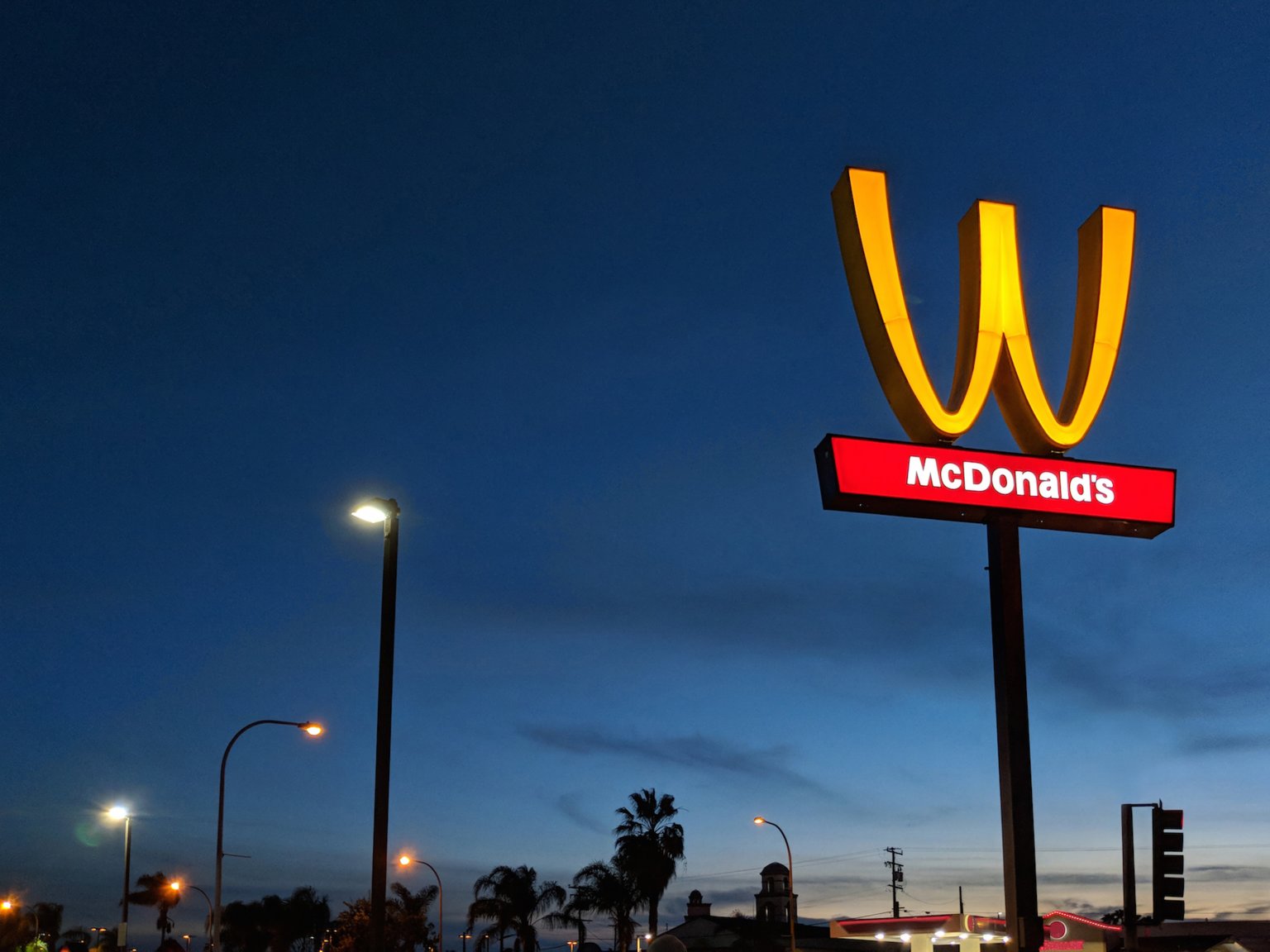
IHOP isn’t the only food chain to cause a stir by inverting its branding. A McDonald’s in California flipped the golden arches in honor of International Women’s Day and the company changed its logo on its social media channels to match.
McDonald’s said this gesture was meant to recognize “the extraordinary accomplishments of women everywhere and especially in our restaurants.”
(Credit: McDonald’s)
We saw increased readership about McDonald’s related to this move. But it was not necessarily a triumph of publicity. The gesture received harsh backlash as people criticized the company for the wages it pays its workers.
Payless pranks influencers
Fashion influencers flocked to Palessi’s popup shop in Santa Monica, California, to sip champagne and try on shoes listed for up to $1,800. The line to get in extended well out the door. Photos were posted to Instagram.
No one suspected the supposed luxury kicks normally sell for as low as $20 until discount retailer Payless ShoeSource revealed it was behind the entire production.
Well played, Payless.
The farce earned a big bump in readership for the company. Unfortunately, the spike was overshadowed a few months later by the news that Payless was imminently closing all of its US locations.
The electric car company was able to pull off this extraterrestrial feat because of its association with SpaceX (since Elon Musk founded both companies).
So when SpaceX needed to show off the capabilities of its Falcon Heavy rocket during a 2018 launch, it brought along the Tesla as the payload to add some extra flare to the event.
How epic was this stunt? Business Insider’s Mark Matousek wrote, “Tesla created the world’s best car commercial without spending a dime on advertising.”
Both companies saw significant bumps in readership around this event.
Pizza and potholes
Most of us likely have experienced the utter disappointment of receiving a pizza from a delivery person, only to open the box and see a pie that looks like it’s reached us via a carnival ride.
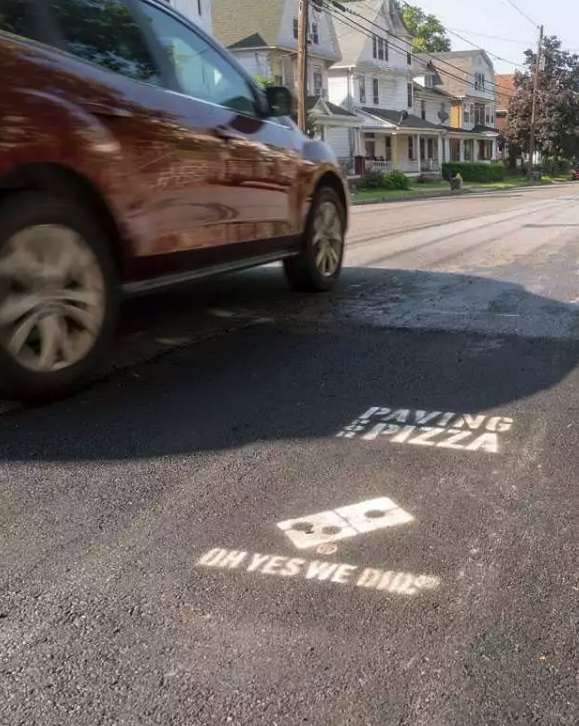
Domino’s created its “Paving for Pizza” campaign aimed, perhaps symbolically, to address this issue by fixing potholes in towns across the US. In theory, this would create a smoother ride for their delivery people.
A road condition meter on the website promoting the campaign shows the supposed carnage various degrees of road disrepair wreak on pizza.
This campaign did not see the same type of traffic spike as the others. When it launched in June 2018, there were a number of stories that caused a small bump in activity as indicated by the red arrow in the chart below.
It’s possible this campaign had more of a slow burn effect though. It seemed to create increasing buzz at the local level as it expanded to new towns.
And despite the lack of readership at launch, there were a number of positives. PRWeek highlighted the campaign’s success on social media. It also covered the sheer number of requests the company received from towns that wanted to be part of the program, which included over 15,000 zip codes.
Sex sells, but at what cost?
Your scientists marketers were so preoccupied with whether or not they could, they didn’t stop to think if they should.
If the advertising maxim “sex sells” is true, then this one might be the new gold(blum) standard. See for yourself.
25-foot Jeff Goldblum statue pops up in London, England, recreating the actor's famous bare chest pose from "Jurassic Park" in honor of the film's 25th anniversary. https://t.co/3sTSdzw5Uapic.twitter.com/DQlGYRhVGc
The British streaming platform Now TV was behind this monumental stunt.
Unlike the other companies we’ve discussed so far, we didn’t actually see a spike for now Now TV when measuring readership in the UK. Taboola’s semantic AI looks for terms in headlines and the first few paragraphs of a story to categorize them into topics. Since Jeff Goldblum is such a big star, most of the story headlines about the statue gave him top billing and mentioned that it was organized by Now TV deeper in the stories.
With this in mind, we also looked at news stories about Jeff Goldblum and did find a bump in readership when the statue first appeared. As you can see below, it wasn’t the biggest Jeff Goldblum news of the past two years. That honor went to the revelation that Goldblum, Laura Dern and Sam Neill would all appear in the next “Jurassic World.”
The competition is fierce for the attention of readers and customers.
The stunts that not only successfully garnered “earned” media for brands but also significant audiences for those media sites can be categorized into three themes: providing a public service or pushing for social good (Domino’s/McDonalds), generating intrigue (Fortnite/IHOP/Payless), or creating a spectacle (Tesla/NowTV).
The successful stunts for brands were the ones that best aligned with their public image. A lighthearted brand like IHOP with playfully named menu items can get away with shenanigans if it’s all in good fun. While Tesla and SpaceX, both known for being on the cutting-edge of technology, took those reputations to the next level with the space car stunt.
Journalists have the important responsibility of giving readers context about these stunts and holding brands accountable when their plays for attention miss the mark. However, when done right, these stunts not only deliver significant PR, they drive interest and traffic for media companies as well.
Note: Taboola’s news publisher partners have access to data on trending topics in the Topic Insights part of Newsroom, a real-time audience analytics platform. There’s also a publicly available version of Topic Insights on the Taboola Trends page.
Taboola is always looking for interesting ways to use data to help bring context to how news readers are interacting with real-world events such as measuring which presidential candidates are getting the most attention and measuring the huge impact of a coordinated media effort to increase climate change coverage. Please DM @franberkman on Twitter if you’re doing any research or reporting that you think this type of data could help support.
The year 2020 will be a tipping point year for media companies. This is the year in which journalists must fight the battle for truth, according to Maria Ressa, CEO of Rappler, a digital news organization based in Manila, the Philippines.
“What we do this year – not just in the Philippines, but all around the world and especially in the United States – will determine whether or not the whole world walks into a cycle of fascism. We’ve been here before. What we do now matters.”
Ressa – who has been the target of persecution in her country – offered these comments as part of a recorded statement presented to attendees of DCN Next: Summit at the Mandarin Oriental hotel in Miami, Florida on January 15.
In her statement, Ressa expressed gratitude to DCN CEO Jason Kint, the DCN Board of Directors, and the members of DCN for supporting her cause and helping her to “shine the light” through journalistic endeavors.
“That really is the only weapon that journalists have,” noted Ressa. “What we’ve lived through in the Philippines…our dystopian present is your dystopian future. This is it, the battle for truth.”
The DCN Board of Directors issued a statement (included below) supporting House and Senate Resolutions calling on Philippine President Rodrigo Duterte to end his political persecution of Ressa and Senator Leila de Lima.
“Healthy democracies thrive with vigorous political discourse and a free, independent press,” noted the statement.
On, the question of whether there exists a line between journalism and activism, Ressa said that “in the battle of truth, journalism becomes activism. This is a hard-fought lesson we have learned in the Philippines.”
Popular populist authoritarian-style leaders are getting elected throughout the world. “Just like they had a dictator’s playbook, they lie,” she said. “A lie told a million times becomes a fact. Without facts, you can’t have truth. Without truth, you can’t have trust. Without all three, democracy as we know it is dead.”
Ressa referenced her own experience when in 2018, the Philippine government investigated Rappler in at least 11 cases. “In 2019, I was arrested…not once, but twice,” she said. “I posted bail eight times.”
Ressa – who in 2018 was named by Time magazine as one of several journalists honored as Persons of the Year – spoke of her experiences at the 2019 DCN Summit in Orlando, Florida – just before one of her arrests. She also made the 2019 TIME 100 List as one of the most year’s most influential people.
The relevance of her travails extends to journalists everywhere. Because, as she said, the “the enabler for all of this is technology. And technology is in the hands of American social media companies,” said Ressler.
“Facebook is our internet” she said. “Where Facebook goes, the Philippines goes. The weaponization of social media was followed by the weaponization of the law. This is what’s happened to the gatekeepers, right? And when the gatekeepers move from the journalists to technologists… lies spread faster than facts.”
Official Statement from the DCN Board of Directors
“We
applaud Senators Edward Markey and Marco Rubio along with Senators Marsha
Blackburn, Christopher Coons and Richard Durbin who introduced Senate
Resolution 142. We also applaud Representative Jackie Speier along with
Representatives Henry Johnson, Jamie Raskin, Brad Sherman and Lloyd Doggett who
introduced House Resolution 233.
Both resolutions call on Philippine President Rodrigo Duterte to end his political persecution of Senator Leila de Lima and journalist Maria Ressa, founder and CEO of Rappler, a digital news organization based in Manila. Healthy democracies thrive with vigorous political discourse and a free, independent press.” —DCN Board of Directors
To reinforce our support of a free press everywhere, DCN is pleased to share the video of Ressa’s statement:
From the boom of direct-to-consumer (DTC) brands to the introduction of new OTT streaming services such as Disney+, 2019 brought significant innovation to the digital media space. As we begin 2020, it’s time to think about which media trends will shake up the new year. Here’s what the MediaRadar team sees on the horizon.
The year of paradox for linear TV
In 2019, it was estimated that 6.4 million paid subscribers stopped paying for television. In 2020, as OTT streaming services continue to gain control, an almost equal, incremental decline in number of paid subscribers is predicted. However, despite “cord-cutting” in the TV industry, linear cable and broadcasters are poised to have a successful year. This is due in part to several major TV events set to occur throughout 2020.
The 2020 presidential election will have politicians spending significant amounts of ad dollars to get their messages across. Some estimate that spending will approach as much as $10 billion – or almost $6 billion more than the 2010 election. Advertisers are also predicted to allocate heavy ad spend towards the Tokyo Summer Olympics, as well as other large tent-pole sporting events like the Super Bowl. This year’s Super Bowl is expected to deliver strong financial results, as Fox reported in early December 2019. In fact, 80% of the inventory had already sold at a reported $5.6 million per 30 seconds. That marks a 7% jump from last year.
Amidst the evolving TV landscape, providing viewers with
real innovation will become crucial for success. Keeping that in mind, in 2020,
it’s believed that nearly all major broadcasters will either reboot or unveil
their paid streaming businesses. While this is just the start, this shows
broadcasters are committed to re-engaging with their audiences and future
proofing subscribers.
Politics’ role in digital media
An exploding ad spend isn’t the only way the presidential
election will shape the industry this year. The election is expected to take
over much of the news cycle and political ads. Every platform will be
scrutinized for accuracy more than ever before. Ahead of the election, digital
ad companies are expected to face strong public pressure to ensure their
political ad policies are tightly “buttoned up.”
Twitter recently announced they will be opting out of politics, disallowing political ads entirely. Google announced that they are restricting targeting capabilities for political ads and Facebook is predicted to follow suit, despite pressures to go further.
Based on these companies’ decisions, it’s likely that other
media will feel the same pressures in 2020. It will be up to these companies’
leadership to navigate this evolving digital landscape during the election
cycle. Foremost: an emphasis on clear and ethical business decisions.
OTT remains hot
Over the past few years, investment in the OTT space has been heavy and rapid. It shows no signs of slowing down in 2020. UBS estimates a combination of 16 media firms will spend $100 billion to produce content in 2020. Of that $100 billion, just three firms – Netflix, Disney and WarnerMedia – are projected to account for 25%, producing unique content for their viewers.
For the financial health of the companies competing in the space, it’s likely that this investment cannot last long-term. Bob Iger, Chairman and CEO of The Walt Disney Company, has acknowledged that Disney+ will probably not break even for at least the first five years. Meanwhile, AT&T has said the same of upcoming streaming platform, HBO Max.
Eventually, it’s predicted that end user prices will rise,
ad-supported models will become more common – SVOD versus AVOD – and spend on
content will decrease to ensure profitability. Being in the early days of the
streaming wars, however, the major players are willing to gamble with losses
now to gain profits later. In the fight to capture the attention, and monthly
payments of consumers around the world, and to make the investment worth it,
not all can win.
2020 outlook
2020 looks to be both an exciting and transformative year
for digital media. The TV industry will shift focus as they seek to re-engage
with audiences through paid streaming businesses and offerings. Major TV
events, specifically the 2020 presidential election and flagship sporting
events, will help sustain linear cable and broadcasters through the year.
Investment in OTT is only expected to increase, especially as “cord cutting”
continues.
Perhaps the biggest change in 2020, though, will be as a
result of the state of politics. With politics playing a larger role in the
space than ever before, media companies will begin adjusting their strategies
and policies accordingly – a change that could have a lasting impact on the
future.
The digital advertising landscape is constantly—and rapidly—evolving. Both publishers and advertisers will continue to see shifts in their businesses in 2020 as new technologies gather increased market share. Those who can harness these innovations to forge stronger connections with customers will have an opportunity to stand out from the crowd and drive revenue.
Staying on top of industry trends is crucial for brands vying for consumers’ attention. However, it can be equally challenging and time-consuming. The team at Lineup Systems compiled a list of predictions for publishers to kick off the conversation. Here are a few of the key takeaways:
Publishers will optimize for voice search
As we gain clarity on which technologies and business models signal trends rather than fads, voice technology is first in line. Voice began generating buzz in the marketplace in 2019, and its growing popularity is undeniable.
“There’s a lot of potential surrounding voice technology, and how to monetize it is the next challenge,” says Sarah Hartland, marketing manager and editor of Lineup Systems’ industry blog, the Newsroom.
It’s clear that the next generation of consumers will search for and buy products primarily through voice technology. By 2022, 55% of households are expected to own smart speakers. And voice searches are estimated to make up half of all online searches. Voice is on track to become a $40-billion channel. This means publishers need to optimize their digital content for voice search to get ahead.
“It’s very positive that publishers are having discussions around voice even if they haven’t quite nailed down how it’s going to generate revenue,” Hartland says.
Publishers will get increasingly creative with subscription models
Subscription models will continue to be relevant in 2020 and present exciting opportunities to reach audiences. Publishers need only look at the profound impact the direct-to-consumer model has had on the retail industry for inspiration and motivation.
The impressive success of subscription models can be largely attributed to personalization. The curated nature of subscriptions helps alleviate the overwhelm that consumers often experience when faced with too many choices. As a result, people are willing to pay for personalized experiences that one-off purchases simply can’t deliver.
Publishers are taking cues from the subscription box model and creating their own offerings. The New York Times kids’ print subscription is one example of an effort to get children away from screens and build brand loyalty. The Seattle Times is one of several media outlets selling subscriptions on Groupon, while The Financial Times bundles its print and digital content for a set price.
Publishers who make the effort in 2020 to understand how their audience wants to consume their content will reap the benefits of the subscription model trend.
Data privacy regulations will benefit brands
Data privacy regulation is top of mind for advertisers and publishers alike due to the California Consumer Privacy Act (CCPA), effective on January 1, 2020. Compounded with Europe’s General Data Protection Regulation (GDPR) and ePrivacy Regulation, this new law signals that data privacy is an issue the digital advertising industry must continue to grapple with. Therefore, it’s time for publishers and advertisers to get creative.
“Because publishers can no longer rely on third-party data, they have to find or build new consent management platforms with first-party data in mind,” says Tiffany Kelly, digital product manager at Lineup Systems.
It’s crucial that publishers diversify their revenue streams and clearly articulate their value to consumers in exchange for opt-in consent. This will help mitigate the impact of consumer privacy laws on their businesses in 2020 and beyond.
Contextual targeting is part of the solution, because unlike audience-based targeting, it reduces the need to use personal data to reach people and has resulted in purchase intent increases of up to 63%.
“We have to recognize this shift as a positive thing,” says Hartland. “Nuances like double opt-ins and cookies can be a pain to figure out. But it will ultimately lead to some exciting long-term benefits around industry leadership, audience loyalty, and data quality.”
Getting in the game is the only way to win
It’s true that as new technology enters the marketplace, it brings challenges with it. However, brands that can adapt can make this work to their advantage in 2020. Publishers and advertisers who can find creative ways to harness the capabilities of new tech will have an opportunity to strengthen their relationships with consumers and drive revenue.
For seven more trends that will dominate 2020, plus a list of ways you can keep up throughout the year, check out Lineup Systems’ free white paper on digital advertising trends.
A year in the life of a digital publisher contains multitudes. Ups to some felt like downs to others. But there were challenges and news that publishers of any size and any vertical faced universally—news and events that defined the entire year.
At Marfeel, we work with 850 global publishing partners, reaching almost one billion sessions every month. That means that we deal with the issues and trends that impact publishers every day. With the knowledge we have in-house, we surveyed our team to collect a list of what we consider to be the biggest publisher trends of 2019 and what they mean for 2020.
Red tape and regulation
Ok, GDPR wasn’t strictly 2019… but it’s effects are still being felt. Users continued to tick pop-ups without reading them. However, in the UK, fines in excess of $300 million were handed out to British Airways and Marriott for failing to ensure information security. A small price, perhaps, to companies of that size. However, they offer a much-needed reminder that nobody is above the law when it comes to GDPR.
The most notable regulation news came from the US, with the passing of the CCPA. This California-wide user privacy policy, touted by some as GDPR-lite, comes into force on January 1st, 2020.
Even if you argue that it’s not effective in protecting user data, it seems more regulation is coming in 2020. And with 50 different states in the US alone, publishers are going to have to find a way to cope with different levels of regulation for different users in 2020.
The great paywall question
To gate, or not to gate, that is the question publishers struggled with for 2019. We saw every variety of paywall tried and tested.
Premium publishers like The New Yorker and The Atlantic opted for soft paywalls, hoping to build consumer loyalty. Others decided to shut out all but paying customers, cleaving their audiences but guaranteeing a source of revenue. Major media groups like The Guardian and The New York Times made news with the success of their subscription models. However, the majority of publishers won’t convert significant audiences into paying customers.
The 2019 headline is that paywalls work, to an extent. Concerns grew about ‘subscription fatigue’ as many worried that audiences would grow tired of paying separately for a variety of different online services. It will be interesting to see whether 2020 crosses that tipping point and, of course, if paywalls work as a long-term proposition.
Content aggregation
Given the booming market for premium content offerings, it seems inevitable that in 2020 a true Netflix for News will emerge. People want to browse around a series of headlines. They want to be able to read stories shared by others and pick based on the story, not the brand.
No one company has managed to crack it definitively yet. But In the United States, Apple News now reaches more iPhone users (27%) than the Washington Post (23%). This is a sign that aggregation is going to gain traction in 2020.
Trust and transparency
In 2019, we learned that people don’t trust the news as much as they used to. This is makes it harder for smaller publishers to break stories and build audiences. Consumers veer towards larger media brands, which are a known commodity. It can be difficult for less well-known entities to break through, or maintain their growth.
And trust runs both ways. Advertisers and publishers both still want more transparency from SSPs and ad networks. Google’s switch to first-price auctions earlier in the year reminded the industry of the long-held last-look advantage that walled-garden exchanges can provide.
The hunt for viewability
Viewability was the hottest term in the industry for advertisers in 2019. Some publishers reacted with surprise that advertisers wanted a guarantee that their ads were actually seen by someone (and not bots).
They started to set minimum standards and refuse to buy space that couldn’t demonstrate their viewability. These standards now exceed the Interactive Advertising Bureau’s (IAB) definition of a viewable impression, which says that at least 50% of pixels must be in view for at least a second. In 2020, publishers will have to offer as close to 100% viewability and find a way to prove it to advertisers.
The creeping growth of voice tech
Alexa, how do I advertise on you?
The use of smart speakers grew from 7% to 14% in the UK last year. And usage was up +3% (from 9% to 12%) in the United States.
With voice-assistants sprouting into more homes, more content is starting to be delivered by voice. Quick answers to once-Googled questions will possibly draw traffic away from news sites in 2020. This and the growth of podcasts as a content format gave advertisers a new concern in 2020: how to bring their programmatic tech to an audio format.
The rise of Gen Z
Move over Millennials. There’s a new generation here to casually pull apart the framework of the industry.
In addition to formulating the right content to reach them, publishers have struggled to find a payment model that appeals to the younger generation. Digital natives get their news from too many different sources to be tied to a single publisher. As Adweek explains, “52 percent of Gen Z consumers will transfer loyalty from brand to brand if they find product quality to be subpar.”
2020 will see diversified revenue generation models, segregated by the audience and content types.
Cookies crumble
Saving the most worrisome for last, 2019 may be the last year of free and unfettered access to user cookies to inform advertising.
Google confirmed proposals to overhaul targeting in Chrome. And Apple went further with its online tracking restrictions. ITP 2.1 reduces the accessibility and longevity of first-party cookies, allowing them to be stored for only seven days.
Ratko Vidakovic, founder of AdProfs summarized what the move meant, “Given Apple’s aggressive attitude towards this issue, it seems like the idea of persistent cookies in Safari, for cross-site tracking purposes, will eventually be a thing of the past.”
The uncharted territories of 2020
To help paint the picture of 2020’s publishing industry to come, Marfeel is putting together the big publisher trends of 2020 report, with the help of their publisher network. By sharing concerns and challenges, the digital publishing industry can unite to create a more informed industry as a whole and overcome the challenges of 2020 and beyond.
Losses due to digital ad fraud made headlines in 2019. Such staggering reports have led some marketers to evaluate their media buying processes and become more selective about where they place their investment. So, what exactly are they looking for? We recently spoke with Jeanne Finegan, chief media officer at HF Media, the media arm of Heffler Claims Group, and vice president of media solutions at Prime Clerk, to gain insight into her selection process and discover what qualities she seeks in a digital advertising partner. Here are some key takeaways:
A quality environment
Advertisers want to partner with sites that provide them with the greatest return on investment. To do this, some are creating formal processes to assess whether a publisher has created an environment that provides minimal risk of ad fraud. Steps marketers have taken include reducing the number of intermediaries through supply-path optimization, using whitelists to separate premium websites from the rest, and dealing directly with publishers for their transactions.
Finegan’s team uses a multi-step process to evaluate
potential partners. “We have a pretty extensive vetting process which includes
proof of service,” Finegan said. “We ask a lot of questions running various
scenarios for timing, quality, responsiveness and transparency.”
Part of this process determines whether the publisher can help
the advertiser reach their target audience and ensure that the audience is legitimate.
Unfortunately, bots that generate clicks and fake traffic
continue to be a contributor to the ad fraud problem. However, since bots don’t
provide any real interaction – such as making purchases – they don’t give
advertisers any return on their investment. As a result, marketers are steering
their buys toward platforms that offer legitimate audiences even if that means
fewer clicks.
“Quality environments, accountability, and human engagement
are being valued over clicks,” Finegan added. “There
has been a long-established narrative in the digital ecosystem that more is
better. Smart marketers will increasingly value quality over quantity.”
Leveraging quality
Publishers can leverage their quality ad environments in several ways:
Create Quality Content. Regularly
publishing well-written articles and videos are likely to attract more human
traffic.
Use Legitimate Marketing Practices. Tactics
such as social media promotions and email marketing attracts real audiences.
While purchasing traffic may generate an influx of clicks, it is also a
large source of bot traffic on legitimate websites.
Prevent Bots. Implementing tools such as registration
forms, paywalls and CAPTCHAs can prevent bots from accessing the site and
produce more genuine traffic reports.
Implementing industry solutions
Marketers also look for publishers that have implemented a
variety of industry-vetted solutions.
One such tool is ads.txt. This initiative created by the IAB Tech Lab allows publishers to list all authorized sellers of their inventory, which helps demand-side platforms detect unauthorized digital sellers in programmatic buys. DSPs crawl these files to make sure that they are buying from legitimate SSPs.
Another solution is the use of MRC-accredited fraud
detection software. There are several solutions in the market that help detect
invalid site traffic.
While fraud detection tools are important for fighting fraud, human oversight is equally as important. The 2019 ANA/White Ops Bot Baseline report revealed that less than half of all ad impressions are able to be fully, transparently validated by measurement tools.
Third-party website audits add another layer of protection by examining the processes the website has in place to detect and reduce fraud. “Through third-party audits, buyers can differentiate quality sites, analyze traffic and clearly see the difference between audited publishers and those who are sourcing traffic or running fraudulent sites,” Finegan said.
A website audit demonstrates a publisher’s commitment to transparency and separates premium sites from the rest by providing evidence that the site is doing everything possible to reduce fraud risk. It also helps media buyers make more informed decisions, leading to more successful campaign outcomes.
“Proof is
critical. Clients need to demand proof of where ads appeared and proof that
the campaign resulted in specific valued outcomes and then pay for performance,”
said Finegan.
A holistic approach
While there are many tools available to publishers to fight ad
fraud, no single solution can solve the entire problem. It’s important for
publishers to include a variety of tools in their fraud-fighting arsenal. By taking
a holistic approach to reducing fraud, publishers can stand out to advertisers and
provide them with high-quality ad platforms likely to deliver real audiences
and results.
It’s that time of year – time to close the books, conduct annual reviews, and plan for the future. When it comes to online advertising, here’s what publishing executives should be monitoring in 2020.
Digital advertising is still a growth industry
In the U.S., advertisers increased spending on digital formats by 17% during the first half of 2019. That’s a net increase of more than $8 billion, far outpacing total advertising growth rates of approximately 5%. Digital is appealing because of its ability to target, comparatively low cost, and general ease-of-use. To capture more digital ad dollars, publishers need to simultaneously educate the market on the core value proposition – i.e., higher quality audiences – and make it easier to buy their products. Digital is a growth market, while growth in the overall ad business is expected to slow.
Podcasts are all the rage
Researchers from Reuters describe podcasting as a “worldwide phenomenon.” In the US alone, 90 million people are regular listeners, double the number as compared with 2015. Their appeal to established publishers is obvious: Podcasts offer an opportunity to repurpose and extend offline content into a new format, and generate new revenue opportunities along the way. The market is increasingly competitive and producing quality shows requires investment and talent. However, the ad appeal of podcasting iso longer in question. Marketers spent $479 million on podcasts ads in2018 and are projected to spend over $1 billion by 2021. We covered the topic of podcast advertising in March, and the underlying fundamentals have only strengthened since.
Creative is making a comeback
The mushrooming marketing technology industry and companion programmatic advertising sector of recent years allowed advertisers to target and scale at unprecedented levels. And brands invested aggressively on both fronts, to the point where the market is arguably oversaturated today. A byproduct of this situation is a subtle refocus on creative. What was once the cornerstone of the ad business – Why worry about creative when reach and scale was so cheap? – got shoved aside is re-emerging. But now that everyone is deploying adtech, it’s no longer a differentiator. Thus, market influencers are talking about the economic implications of creativity. And any advertising discussion that centers on quality favor publishers. It’s a talking point that can be exploited.
Brand safety: the rock in the industry’s shoe
No one really wants to discuss brand safety, or ad fraud, or transparency. It’s like planning for an economic downturn. Sure, it’s prudent, but the act of doing it feels like an avoidable self-fulfilling prophecy. Conventional wisdom says “the market is growing, benefiting both brands and platforms; let’s just keep plowing forward.” But this topic isn’t going away. And it could get more attention as market conditions soften and dollars become scarce.
During lean times, corporations reflexively look for cost-savings opportunities, and digital advertising is perfect target, as a growing and bloated line item. In recent years, brand safety, transparency and fraud initiatives have been molting; it’s no longer front-page news, as was the case with FBI investigations in 2018, but there are pockets of focus and expertise poised to emerge. This year, for example, we saw the launch of “data transparency labels.” And Jason Kint, CEO of Digital Content Next, has been a vocal advocate of identifying problem areas and offering solutions. This could be the year that these issues break out and get priority treatment, and it will favor publishers – who haven’t really been ensnared in these controversies to date – in a big way if it happens.
The future is bright
Though more than a decade old – Facebook was launched in 2004, Google in 1998 – the digital advertising category continues to evolve rapidly and offer myriad opportunities to established and upstart publishers alike. Sure, the duopoly will continue to dominate the category for the foreseeable future. However advertisers are exploring alternatives in a more meaningful way these days.
Advertisers are tired of being at the mercy of a couple of big platforms. They also have more infrastructure and know-how to wean their dependencies. Additionally, the biggest platforms are caught up in hailstorm of noise and distraction related to politics, privacy and governance. With the ability to offer compelling content, brand safety, and high-end audiences, savvy publishers are well-positioned to be prosperous in 2020.
About the author
Tim Bourgeois is a marketing advisor who helps brands optimize ROI on advertising, technology and agency investments through digital marketing audits and strategy engagements.